
고대 인류가 목격한 이계의 존재, Barrier Canyon Style
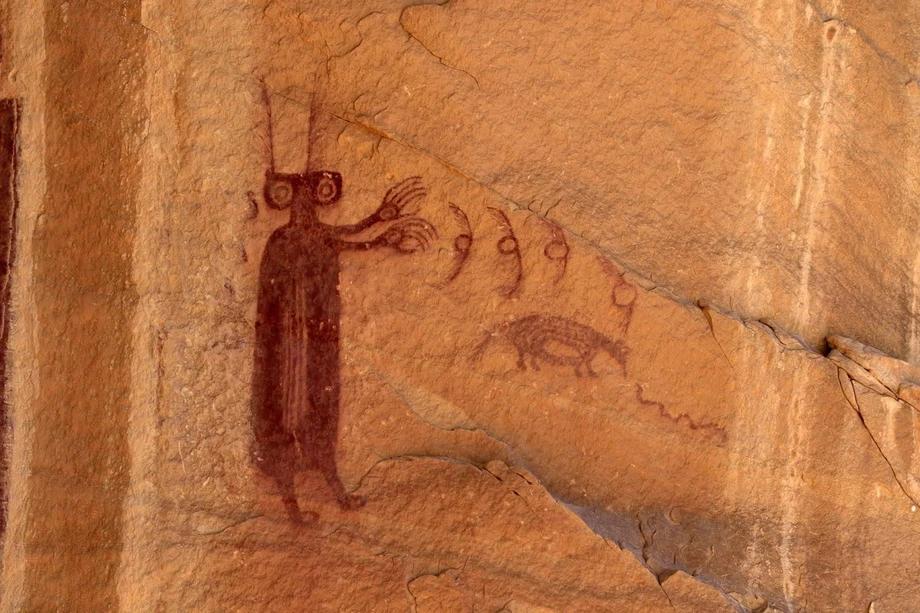
유타 주 중부 사막의 배리어 캐니언에 있는 그림 문자, 눈이 크고 안테나가 달린 사람의 모습을 묘사. 기원전 2000년-서기 500년, 미국
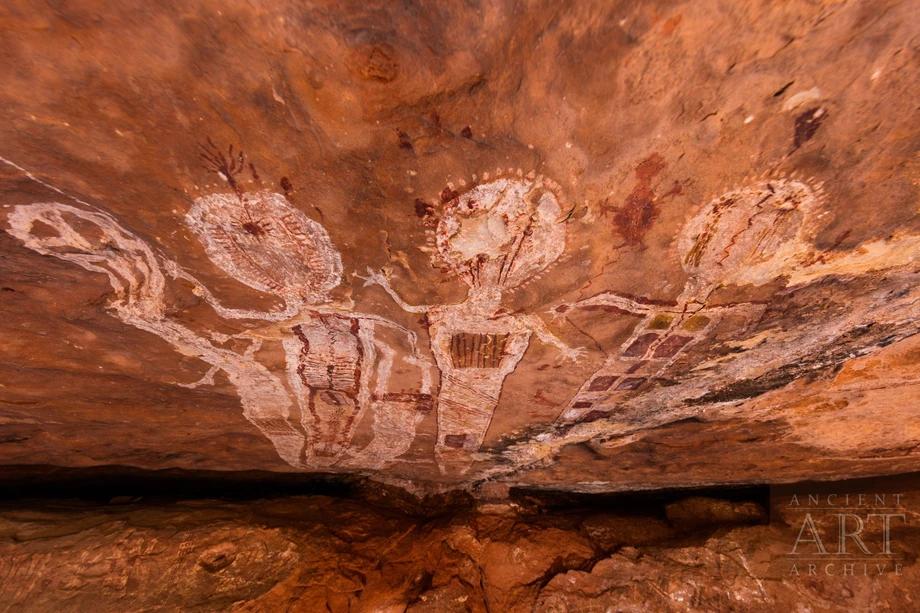
Highly detailed rock art panel in the canyons of Mojave County, Arizona
Esplanade Polychrome Style -also known as Grand Canyon Style Polychrome- is one of the most recent rock art styles to be identified in North America. It was not reported to until the late 1980s and still is only known from 25 sites all located in Mojave County Arizona. It is distinguished by finely painted figures with elongated and often x-ray body details. The use of red, yellow, white, black and sometimes green paint is also present in many sites.
In one of the best-known shelters the images are remarkably well preserved. No concrete dating work has been done on the style but they are assumed to be similar in age to other large scale anthropomorphic North American rock art traditions likeBarrier Canyon Style rock art (Late Western Archaic up to 4,000 years BP).
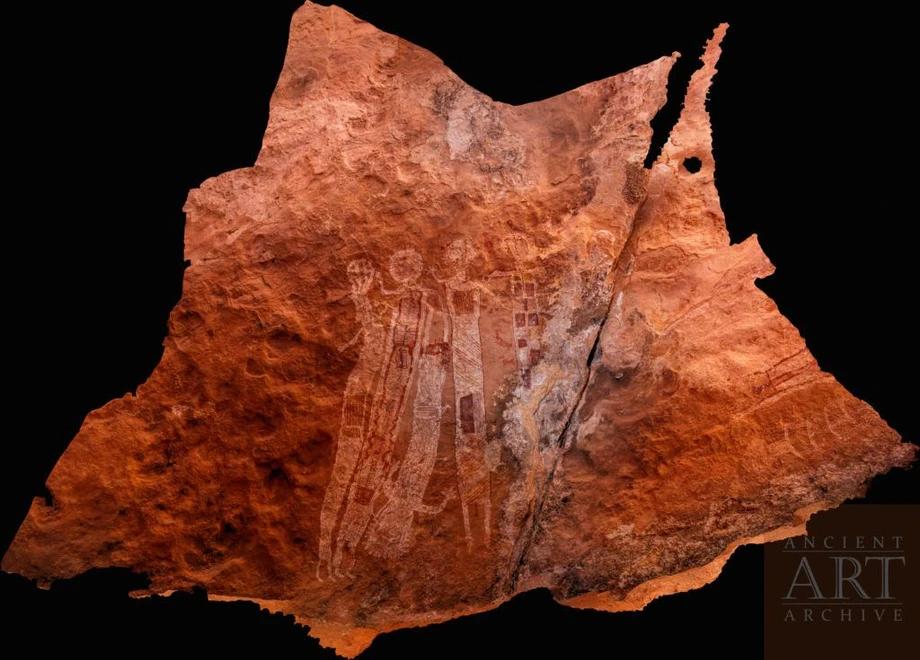
An Esplanade Style polychrome rock art panel in Mojave County, Arizona
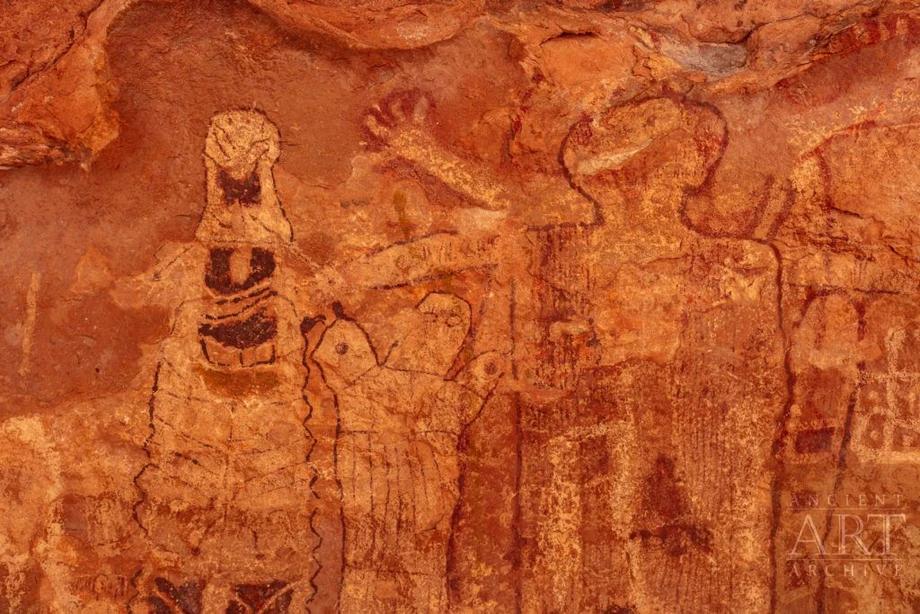
Detail of an Esplanade Style / Grand Canyon Polychrome painting from Grand Canyon National Park in Arizona. This style is known entirely from sites within Mojave County, Arizona
One feature that distinguishes the style are the finely painted body details such as the eye lashes seen in the image above.
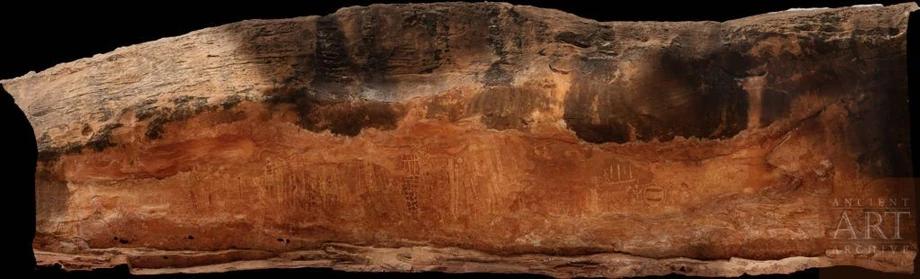
An orthomosaic image of the type site for Esplanade Style polychrome panel in Mojave County, Arizona.
What do these images mean? We don’t know. But do we need to know in order to experience the mystery and beauty of the work?

Details of the type site for Esplanade Style Polychrome.

Stylized quadrupeds in a well-preserved rock shelter.

The Great Gallery, an extensive panel in the Barrier Canyon Style in Canyonlands National Park

Courthouse Wash Panel, located above Moab, Utah in Arches National Park. This panel was extensively vandalized in 1980 using a steel wire brush. No one was convicted and the motive for the destruction is unknown.

Barrier Canyon style pictographs near Thompson Springs, Utah

An anthropomorphic figure and a spiral petroglyph engraved on a sandstone rock on Tempi’po’op Trail in Washington County, Utah.

Anthropomorphic figures carved on sandstone along the Tempi’po’op Trail in Washington County, Utah.
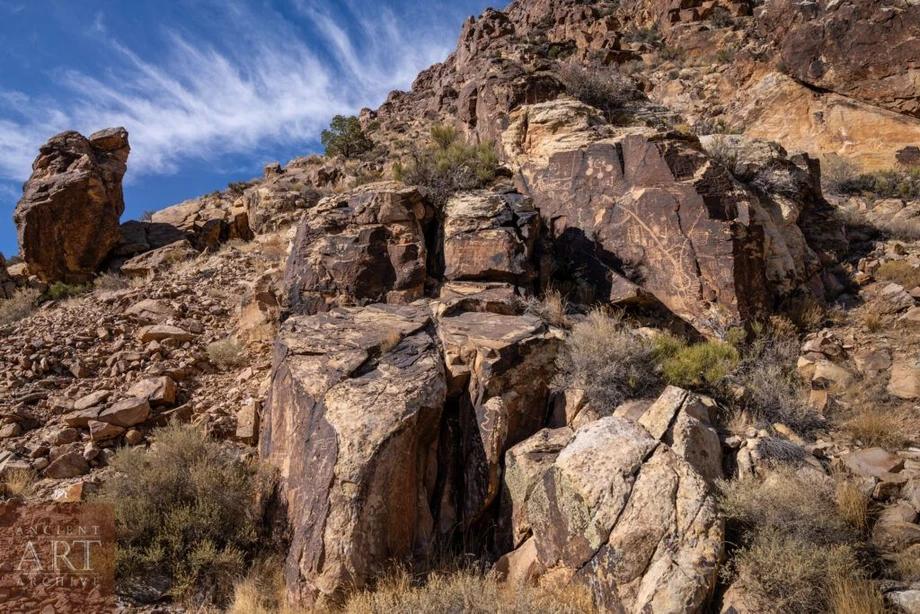
Petroglyphs at Parowan Gap in Iron County, Utah. Parowan Gap petroglyph site contains images from Paiute and Fremont cultures.
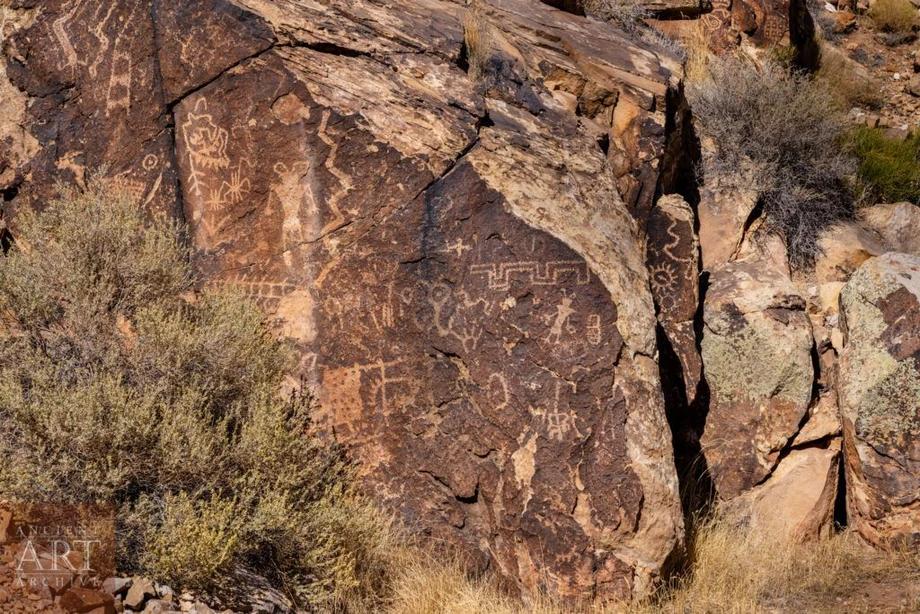
A detailed view of one of the petroglyph panels at Parowan Gap. The petroglyphs here are attributed to the Fremont and Paiute cultures.
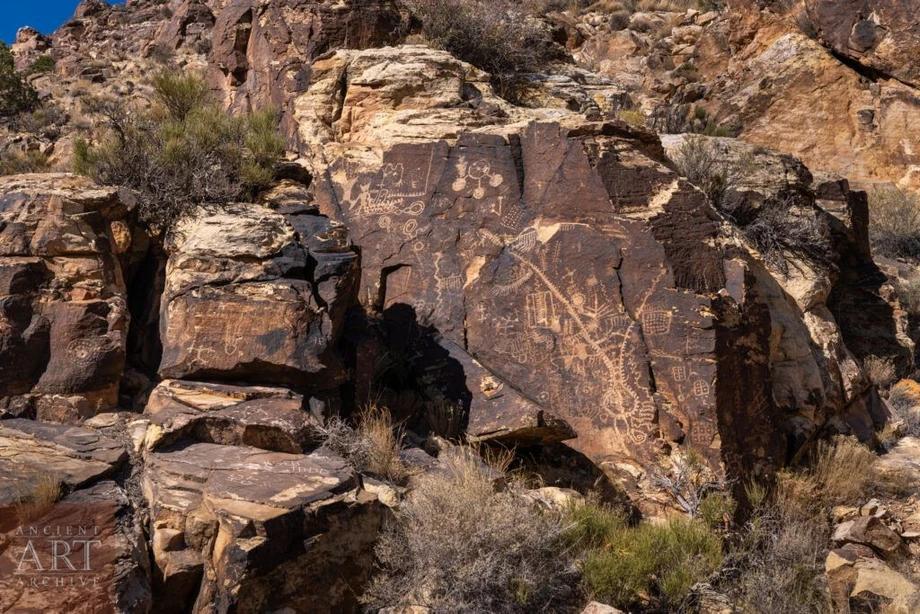
The “Zipper” panel at Parowan Gap Petroglyphs in Iron County, Utah. In the Paiute interpretation of this panel, it is the migration of the old world to the new. There are elements of Fremont culture recorded on these rocks as well.

Newspaper Rock State Historic Monument is an Ancestral Puebloan pictograph panel in San Juan County, Utah. While the images engraved on Newspaper Rock is primarily Ancestral Puebloan, there are images from later cultures.

The Rochester Creek rock art panel is a complex petroglyph site on a large rock promontory overlooking Muddy Creek. The main panel features a large “rainbow” pattern that is seen often in the San Rafael Swell. There are numerous highly stylized zoomorphic and anthropomorphic figures.

The Rochester Creek rock art panel is a complex petroglyph site on a large rock promontory overlooking Muddy Creek. The main panel features a large “rainbow” pattern that is seen often in the San Rafael Swell. There are numerous highly stylized zoomorphic and anthropomorphic figures. Age estimates range from Archaic to Fremont. There is also modern graffiti and damage from attempted looting on the panel

Three anthropomorphic petroglyphs carved onto a sandstone face at the Rochester Creek Rock Art site in Emery County, Utah. Theses three figures are located in a sheltered alcove on the west side of the site and are presumed to be older than the Fremont petroglyphs that make up the bulk of the engravings at Rochester.
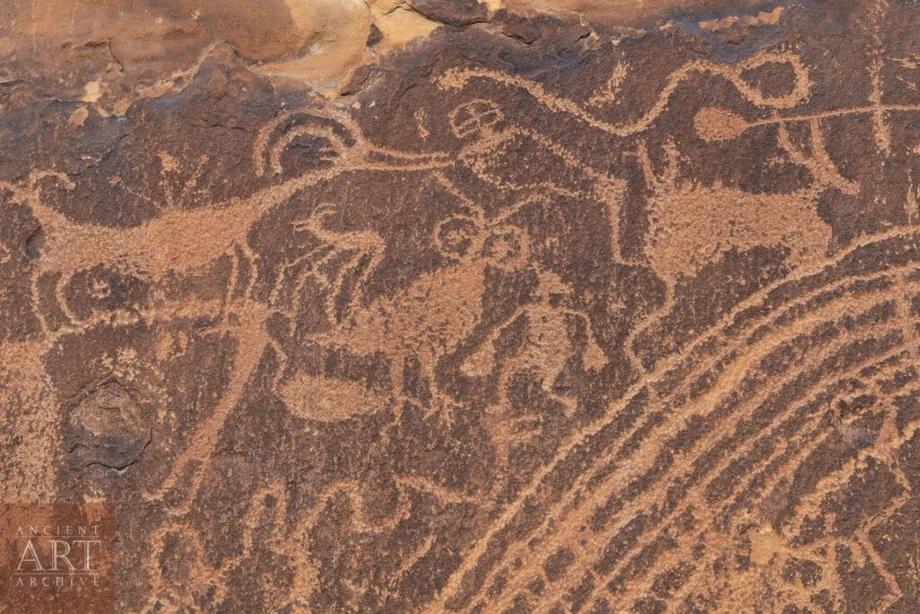
A detailed view o f Fremont petroglyphs engraved on the Rochester Creek rock art panel in Emery County, Utah.
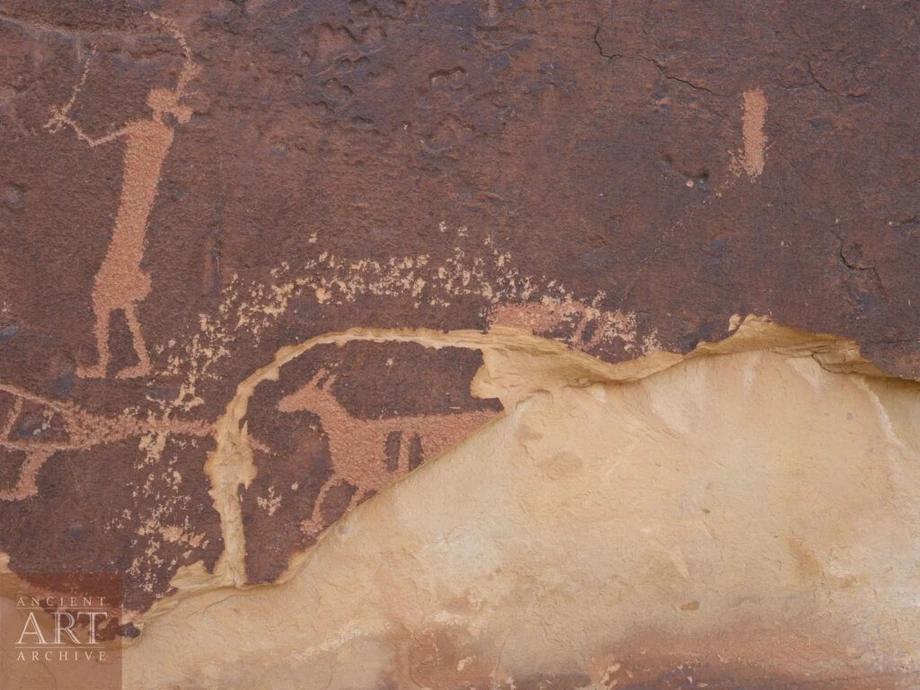
An attempt to remove a petroglyph at Rochester Creek has left the panel badly damaged.
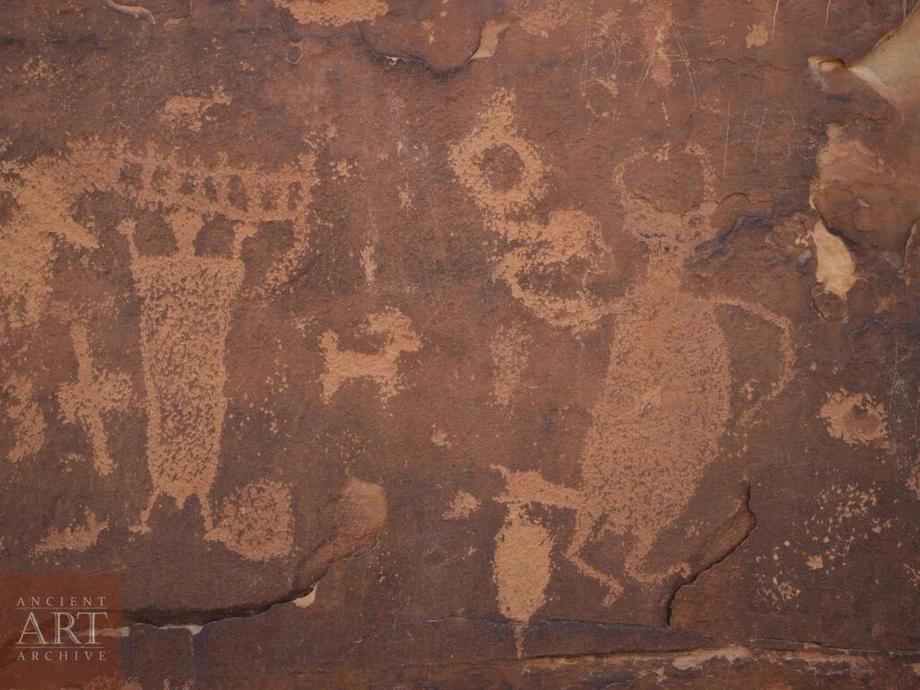
The Rochester Rock Art Panel is a large and complex petroglyph site on a promontory overlooking Mud Creek near Emery, Utah. They style is hard to catagorize being somewhere in between Fremont on and Barrier Canyon Style.

The distinct artistic form known as the Barrier Canyon Style (BCS) stands as a remarkable representation of ancient rock art primarily found in Utah, notably concentrated within the San Rafael Swell and Canyonlands National Park. This unique style extends across a significant expanse of Utah and western Colorado, creating a profound mark on the landscape. Coined by Polly Schaafsma in “The Rock Art of Utah” (1971, revised 2002), this classification encompasses various sites, notably along Barrier Creek in the former Barrier Canyon, now known as Horseshoe Canyon.
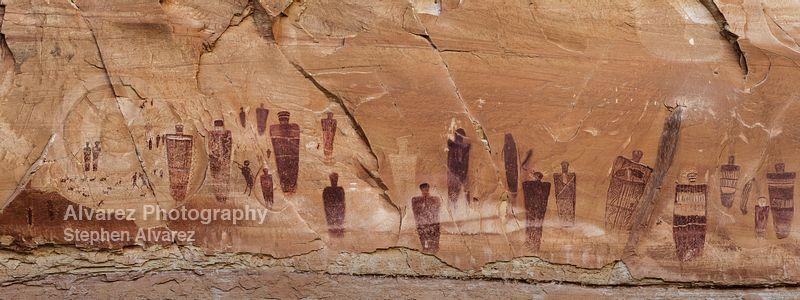
A detail of the Great Gallery of Horseshoe Canyon photo by Stephen Alvarez
These awe-inspiring rock art panels showcase pictographs, intricate paintings embellishing rock surfaces, alongside a limited collection of petroglyphs—etched images within the stone—capturing the quintessential traits emblematic of the Barrier Canyon Style. Belonging to the archaic period, possibly the late archaic phase, these artistic expressions span an estimated time frame of 1500 to 4000 years. The unearthing of clay figurines resembling this stylistic tradition in Cowboy Cave has yielded radiocarbon dates exceeding 7000 years, hinting at an ancient lineage for this form of artistic expression.
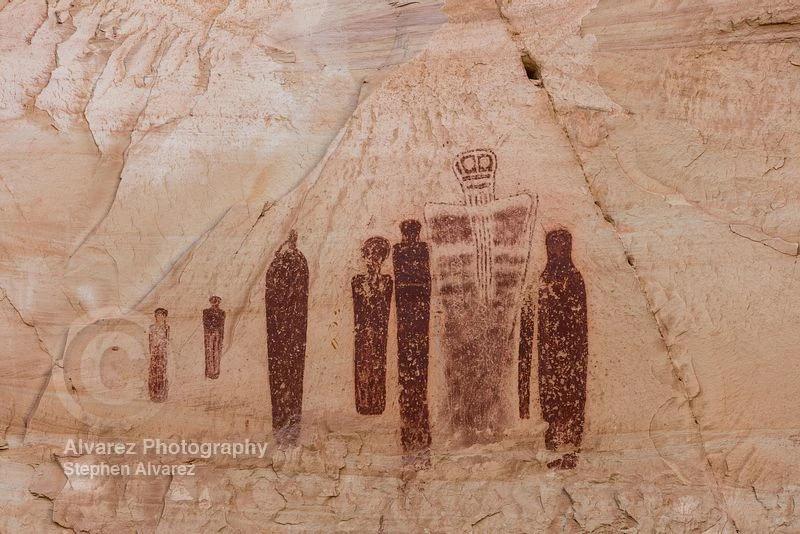 Often referred to as the Holy Ghost panel, these large anthropomorphic figures typify Barrier Canyon style rock art. Photography by Stephen Alvarez
The heart of the Barrier Canyon Style lies within central Utah’s landscapes, prominently displayed in the rock art nestled within the San Rafael Swell and Canyonlands National Park. These mysterious depictions, potentially carrying profound spiritual significance, offer glimpses into the deep artistic language of a civilization lost in the annals of time.
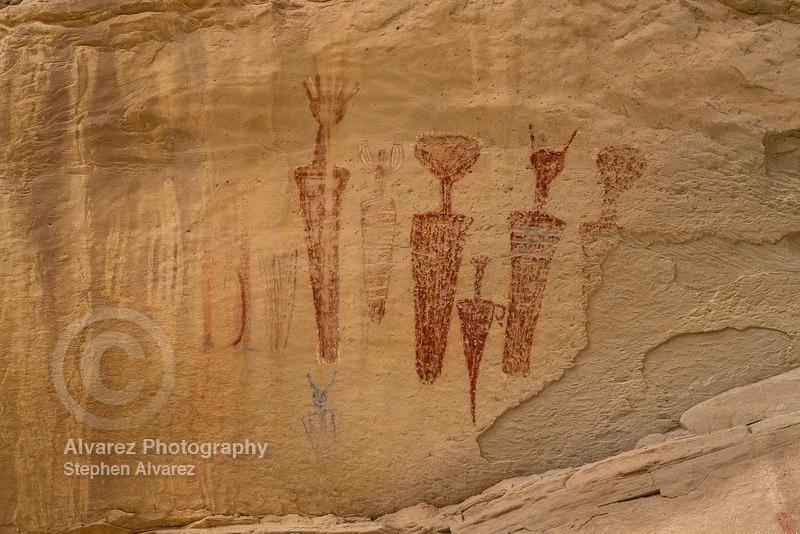 The “Carrot Man” site in Rio Blanco County, Colorado. Photograph by Stephen Alvarez
Yet, the preservation of these invaluable remnants of ancient artistry encounters persistent challenges from human vandalism and the relentless natural processes of deterioration. Therefore, the protection of these venerable cultural vestiges assumes paramount importance in safeguarding Utah’s rich and diverse heritage.
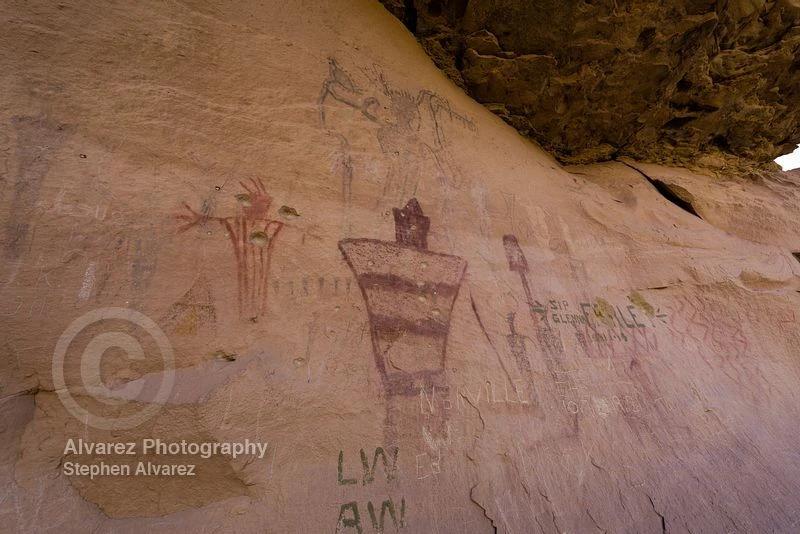 Vandalism on a Barrier Canyon Style pictograph panel in Grand County, Utah. Photograph by Stephen Alvarez
As scholarly investigations delve deeper into the enigmatic nature of the Barrier Canyon Style, it becomes increasingly clear that these expansive rock arts provide invaluable insights into the ancient cultural fabric and artistic traditions of the region.
For information on how to visit the Great Gallery visit our International Public Art Site Recommendations and scroll to the Great Gallery.
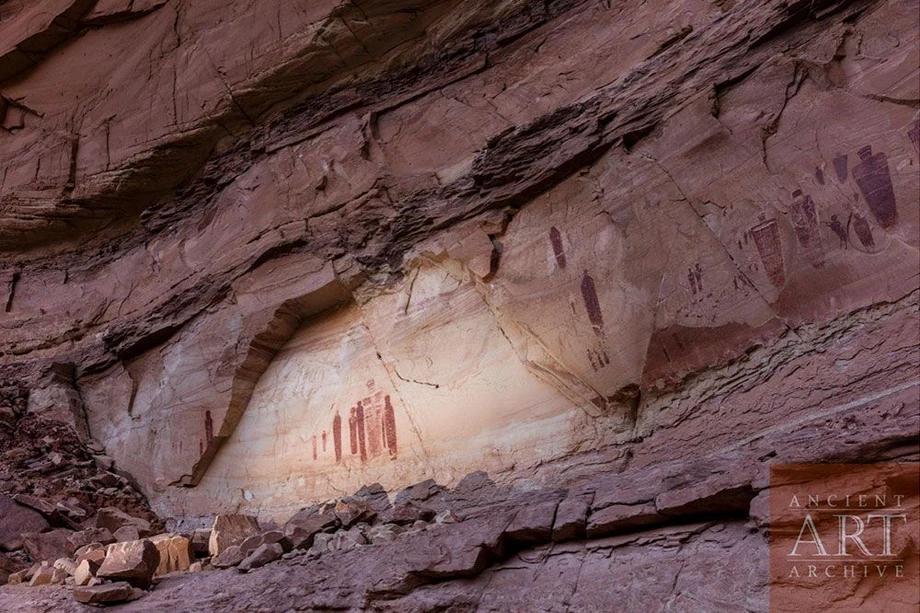
The “Holy Ghost” section of the Great Gallery of Horseshoe Canyon.
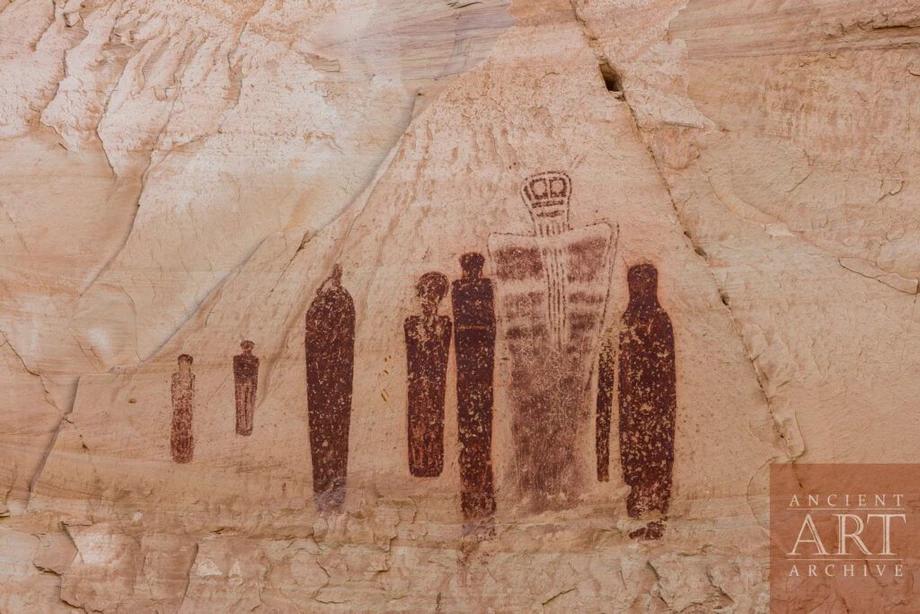
The Holy Ghost figures of the Great Gallery. The central figure is over 6 feet tall and typifies Barrier Canyon Style rock art.
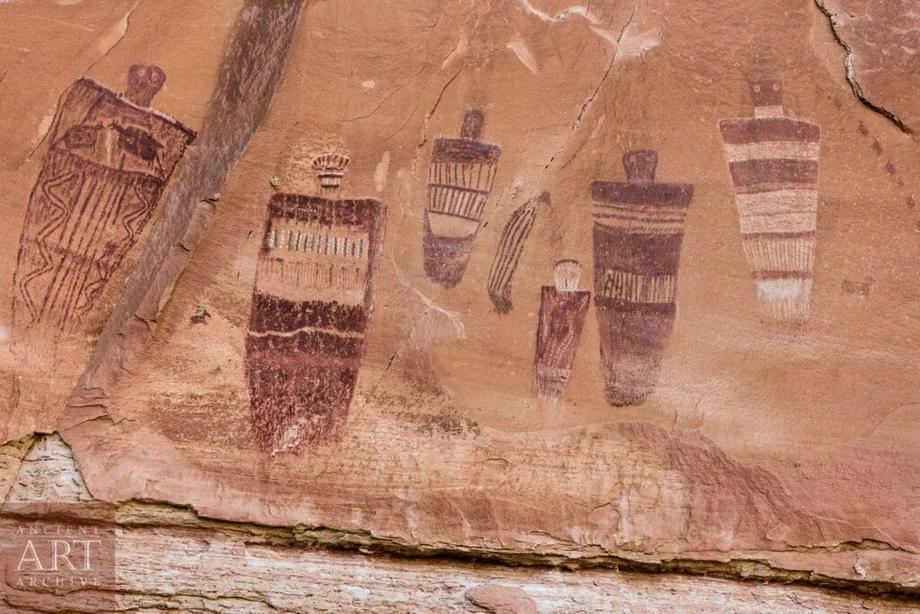
Detail photo of the Great Gallery of Horseshoe Canyon.
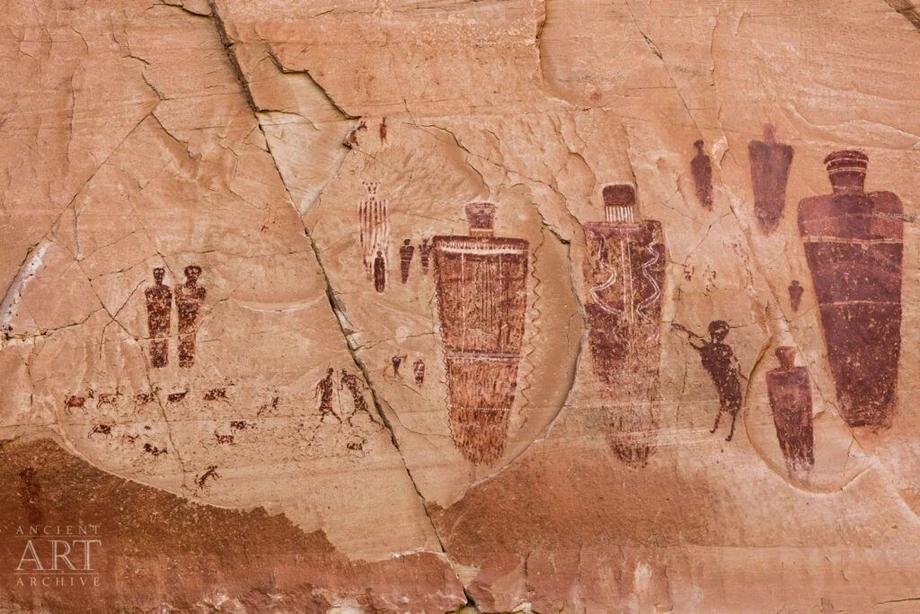
Detail photo of the Great Gallery of Horseshoe Canyon.

Barrier Canyon style images painted on the South end of the Great Gallery panel.

a Kokopelli flute player on the main Sand Island petroglyph panel near Bluff, Utah. The flute has been reetched at some point in the past.

Barrier Canyon Style pictographs in Sego Canyon, Utah photographed sometime in 1997.

Barrier Canyon Style pictographs painted on the sandstone wall at Sego Canyon in the Thompson Wash Rock Art District, Utah.
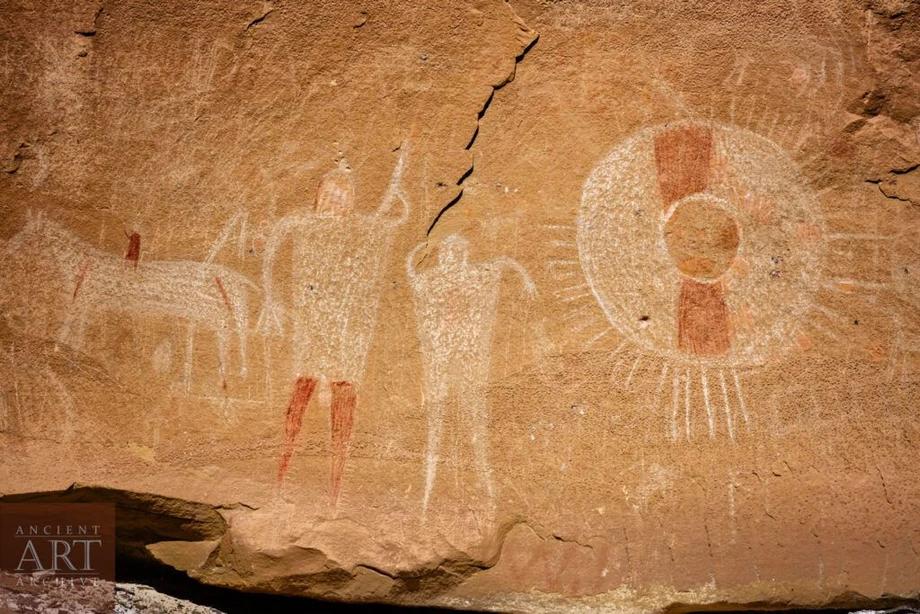
Ute petroglyphs at the Sego Canyon interpretive site in Thompson Wash.

Fremont petroglyphs recorded over older and very faint Barrier Canyon style pictographs at the Sego Canyon rock art site
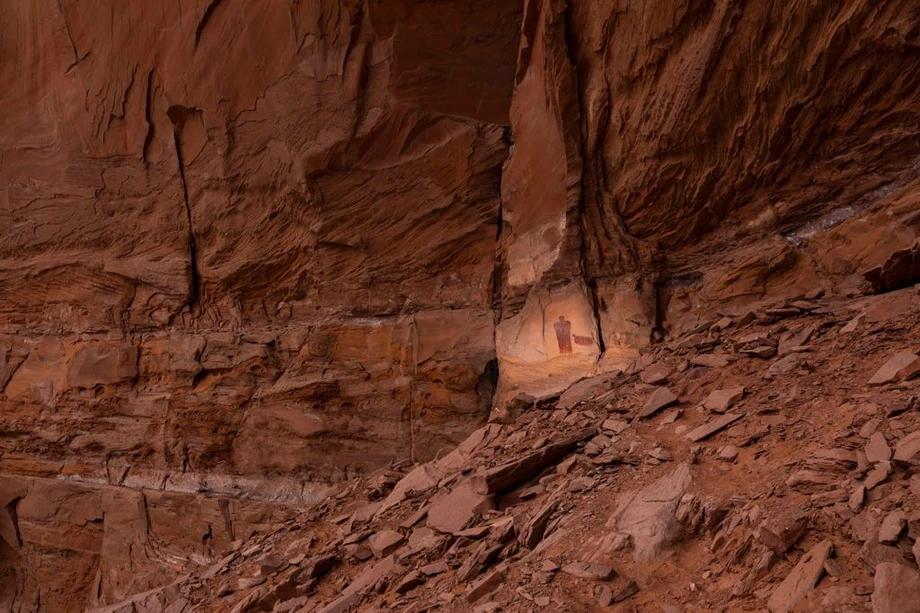
Barrier Canyon rock art in Utah. BCS panels are believed to have been created during the archaic period (probably late archaic) and are estimated (from direct and indirect carbon 14 dates) to be somewhere in the range of 1500 to 4000 years old.
An enigmatic and evocative piece of Barrier Canyon Style (BCS) rock art in Southern Utah. Rock art is notoriously hard to date but his style of painting likely comes from the late Archaic periodof Southwestern Archeology (1500-4000 BP). There are a large handful of sites across Southern Utah (also into Colorado and Arizona) with a similar style. The large scale anthropomorphic figures that are often finely painted.
This is one of the smaller BCS panels in the area. Big sites like the Great Gallery cover hundreds of feet and many complex paintings.
BCS is one of my favorite styles of North American rock art. The scale and attention to detail speak to me. The figure in this panel is human-sized.

A detailed view of Barrier Canyon rock art in San Juan County Utah.

The Rochester Rock Art Panel, Emery County Utah
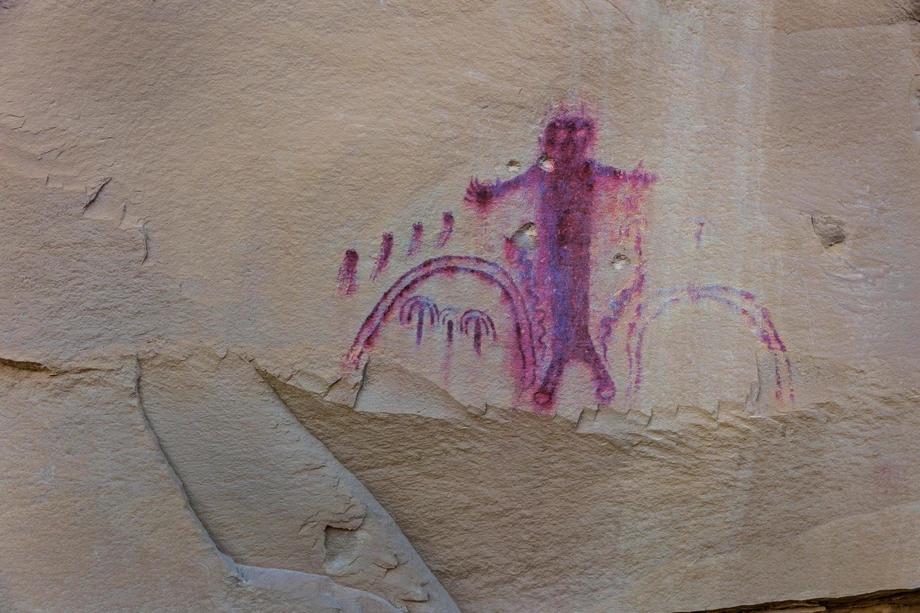
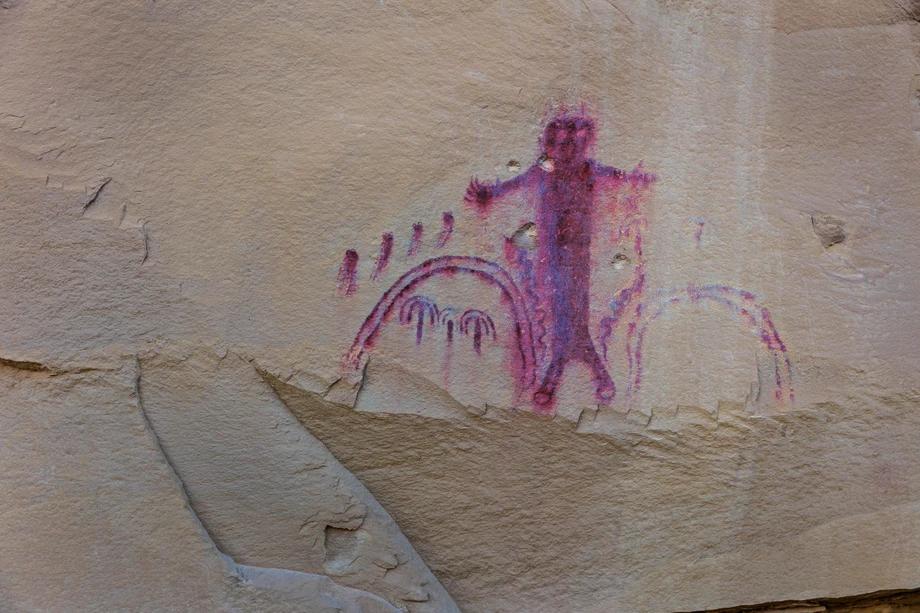
A horned anthropomorphic petroglyph with rainbows enhanced with D-Stretch.
Barrier Canyon Style Pictographs, Emery County Utah
Within this faded group of Barrier Canyon Style pictograph is the Double Rainbow man. The figure is somewhat faded so I have run D-Stretch to bring it then recombined it with the original image to make the figure above.
The panel also has this complex and beautiful figure that contains classic BCS themes in particular horned or head dressed figures and snakes. T
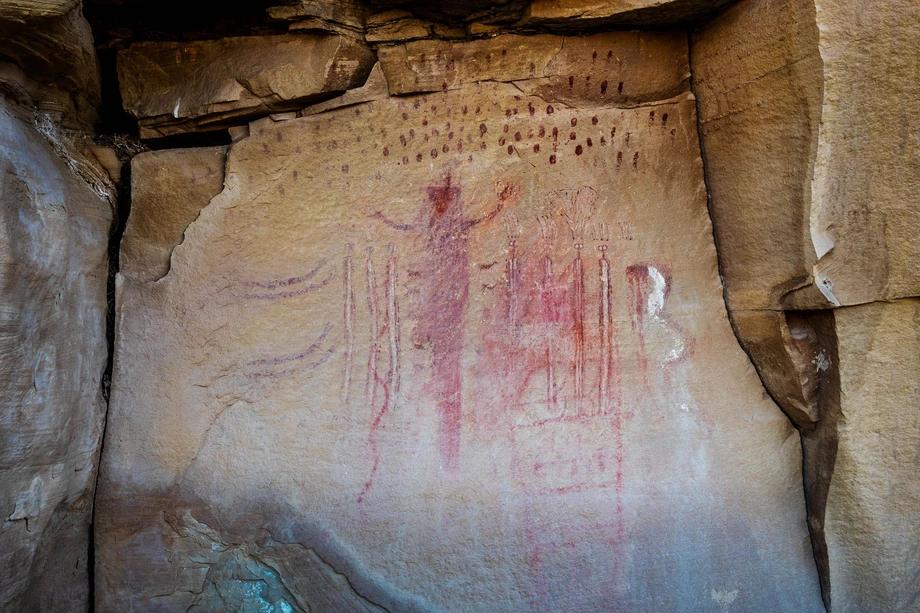
Barrier Canyon Style Pictographs in a side canyon of Ferron Creek. Emery County, Utah
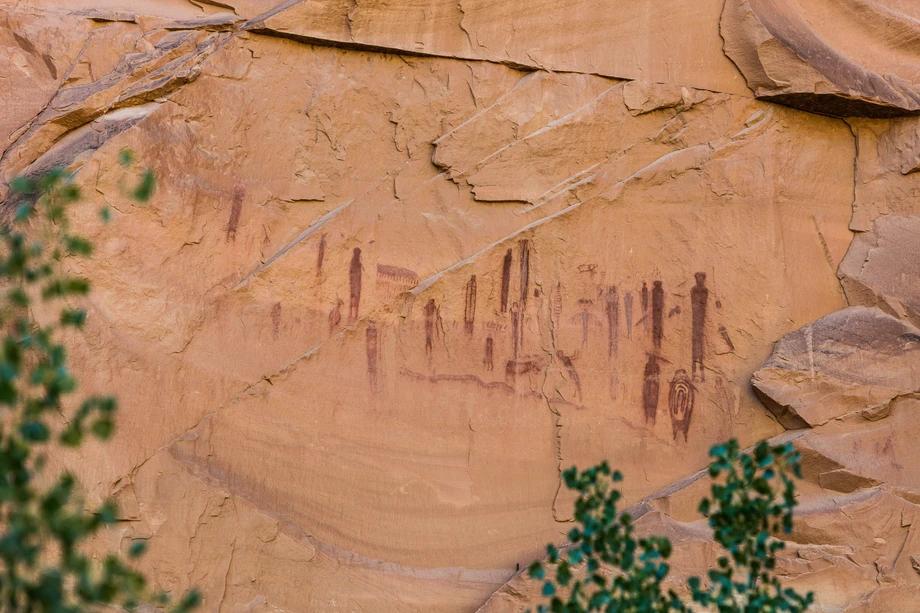
A detailed view of the High Gallery of Horseshoe Canyon, Wayne County Utah.
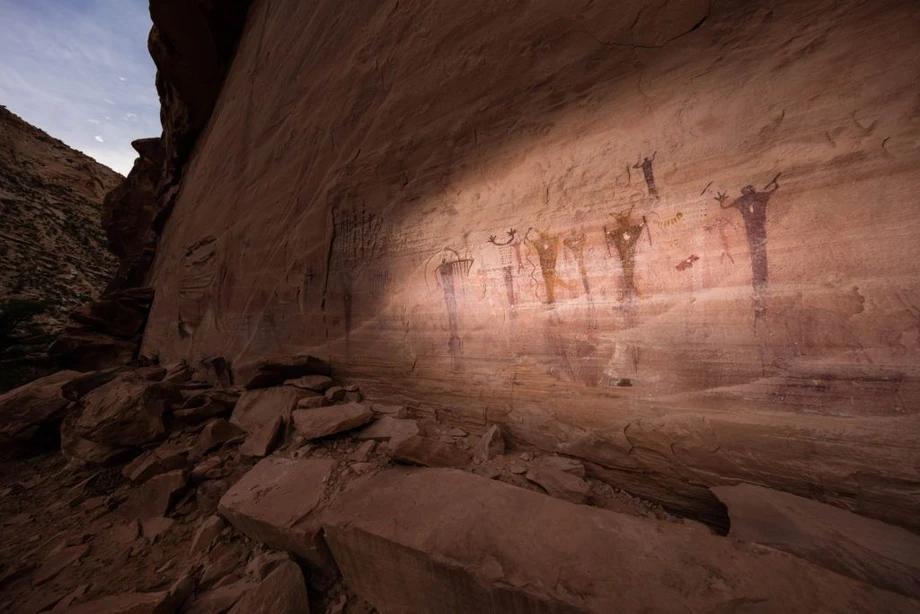
Buckhorn Wash Pictograph Panel on the San Rafael Swell

Hundreds, thousands of years exposed to the elements often leave rock art hard to see. Famous sites like Chauvet, Altamira and the Great Gallery are well preserved but some important rock and cave art sites are weathered almost beyond recognition. How do we see rock art that is mostly weathered away? Mathematics, NASA and rock art enthusiast Jon Harman have a solution. It is an image analytic program Harman developed called DStretch.
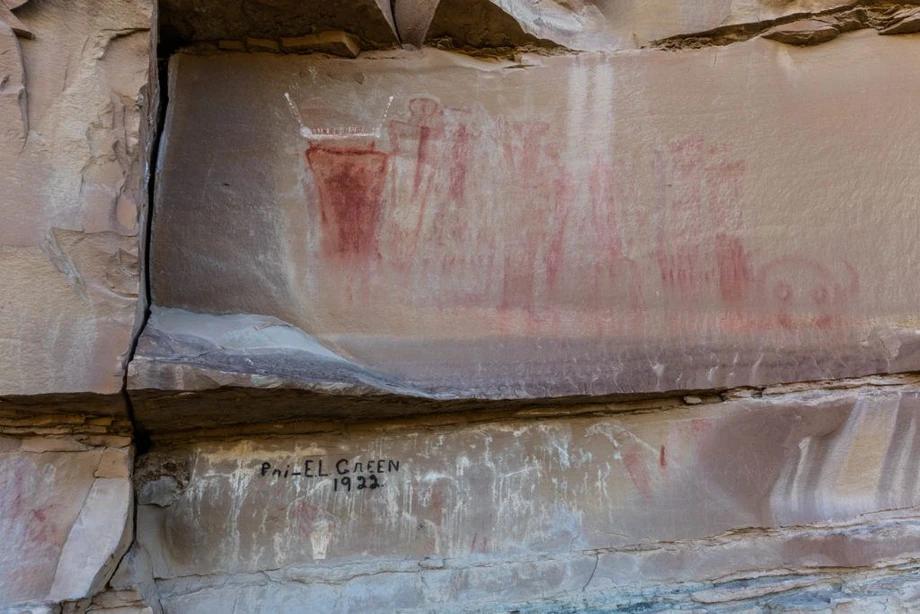
Barrier Canyon Style Petroglyphs in a side canyon of Ferron Creek. Emery County, Utah. See what it looks like after DStretch on the next page.
The program uses a method called decorrelation stretch, which was originally used by NASA to improve remote sensing images of Mars. DStretch takes the NASA algorithm but optimizes it for rock art. The program analyzes photographs of rock art sites, and then shifts the images’ color to highlight designs and patterns that have faded away or otherwise become invisible to the naked eye by providing more contrast within the image. The program is especially useful when it comes to faded colors, particularly reds, yellows, blacks, and whites, but it is also works on etchings and other rock art forms. The results are a false color image that is often much more detailed than the original.
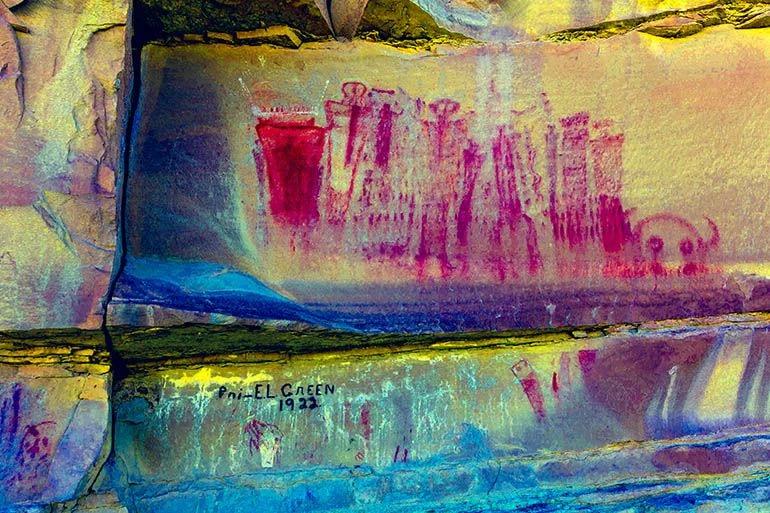
Faded Barrier Canyon paintings after DStretch
One of DStretch’s most notable features is that its results are repeatable, and repeatability is the hallmark of the scientific method. Before the program’s widespread use, researchers would have to fill in faded gaps in rock art images with their own interpretations. This often produced widely divergent results. Now different groups of researchers can take pictures of the same pictograph or painting and then run them through DStretch. Even if they have different images of the same subject, the program will produce the same result. By revealing what is invisible to our eyes, DStretch eliminates massive amounts of uncertainty about ancient art, making it an extremely valuable tool. Because of its effectiveness and ease to use, DStretch has become one of the most important pieces of technology for anybody interested in rock art.
The program is available as a plugin for ImageJ processing software (here). It is also available as a standalone program for Android and iOS.
-Joshua Alvarez