
프롬프트 렉카당해서 그냥 전면공개함
이전글 : https://www.dogdrip.net/724163803
이전에 챗지피티 이미지 2.5 활용해서 만든 ai 일러스트로 개드립을 간 적이 있었음.
원래 본 개붕이가 던 캐릭터 뽑으려고 이것저것 연구해서 공개 배포했던 화풍 프롬프트였던지라, 던파 판을 비롯한 이런저런 커뮤에 배포했었고,
많은 던붕이들이나 몇몇 로붕이들이 프롬프트로 자캐짤 생성하면서 향유하는 모습을 보고 기분이 좋았었음.
첫 개시일인 9월 7일 이후로도 나는 적당히 프롬프트로 이미지 생성을 계속 하고 있었음.
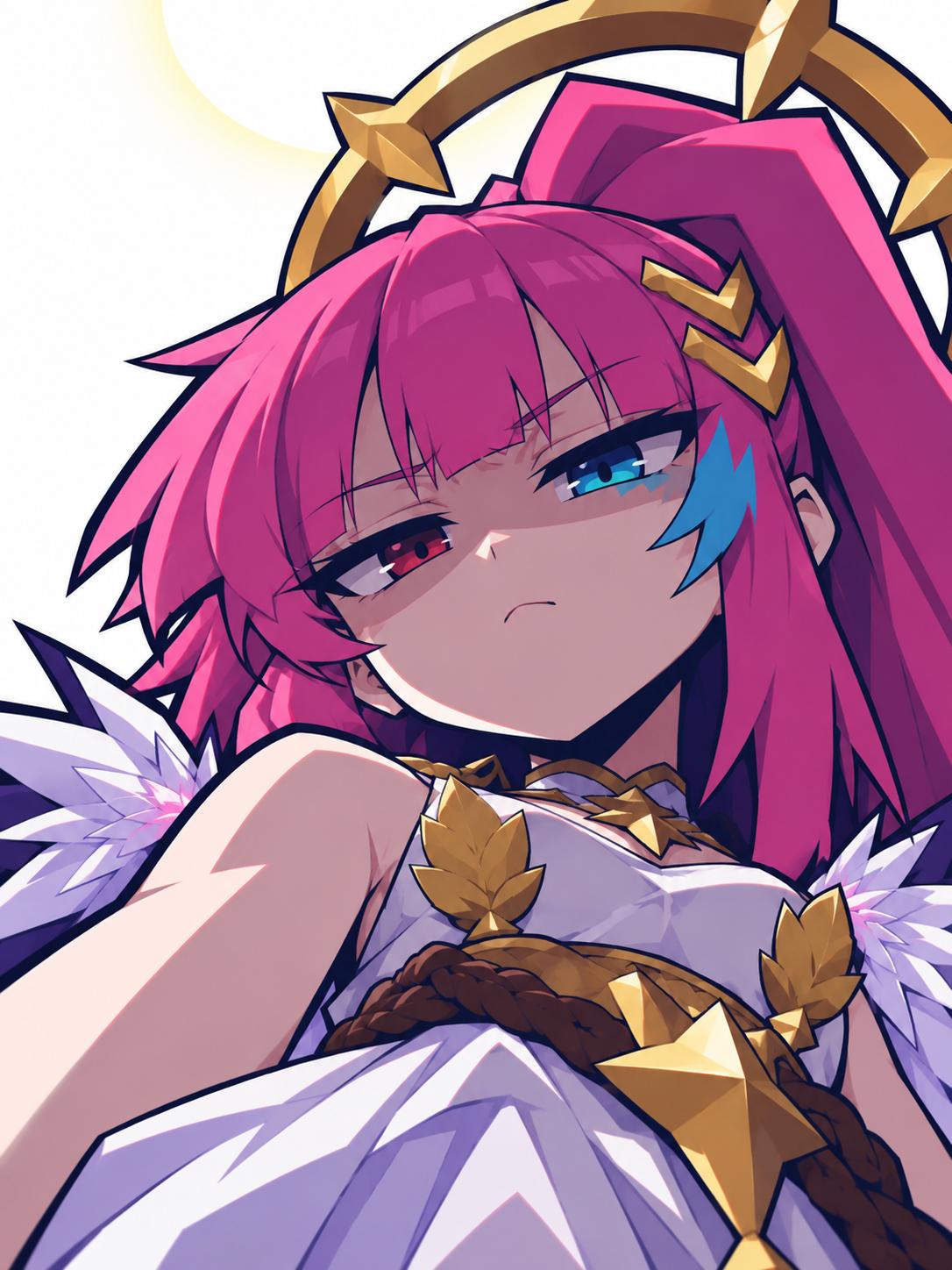
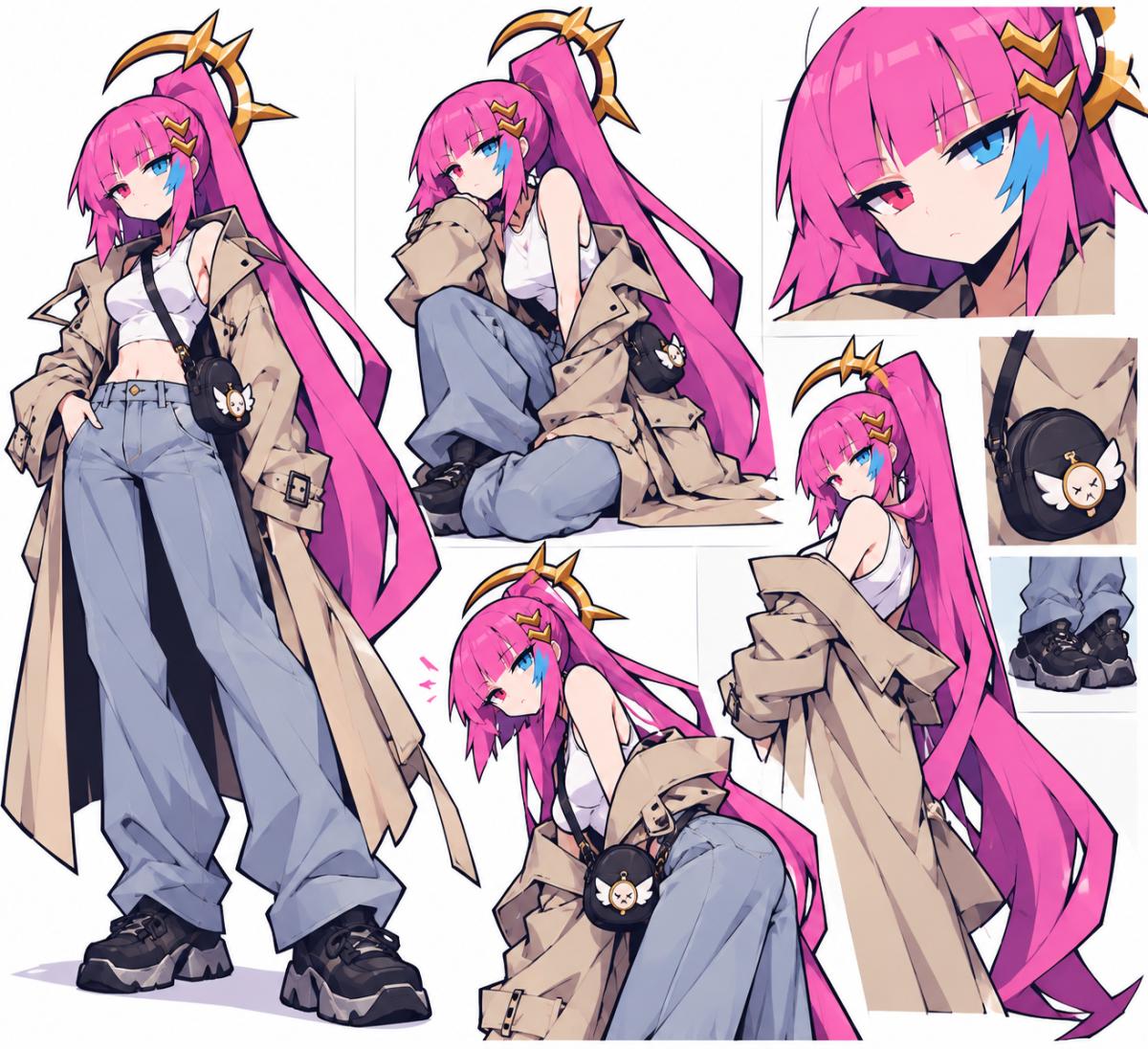
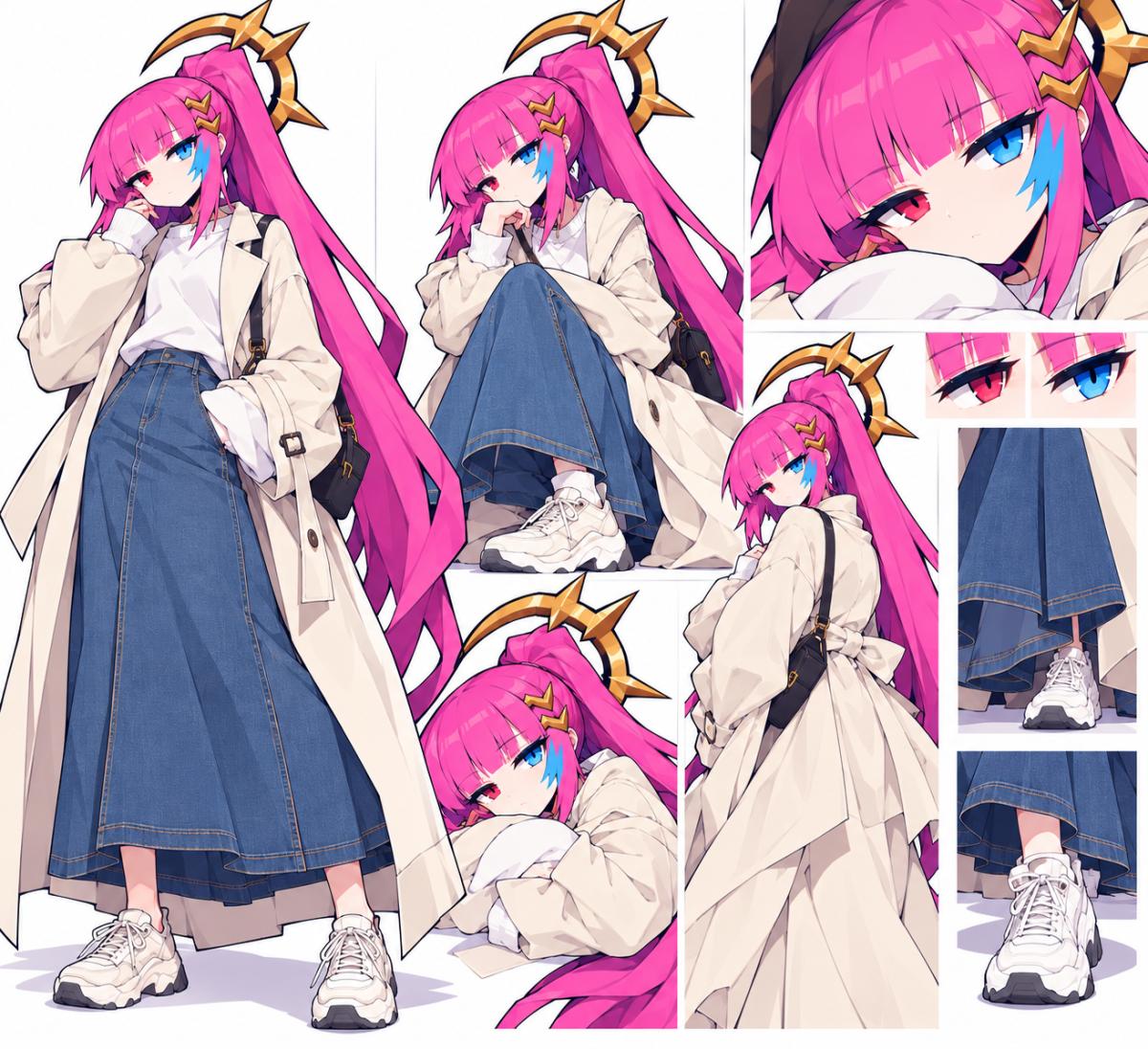
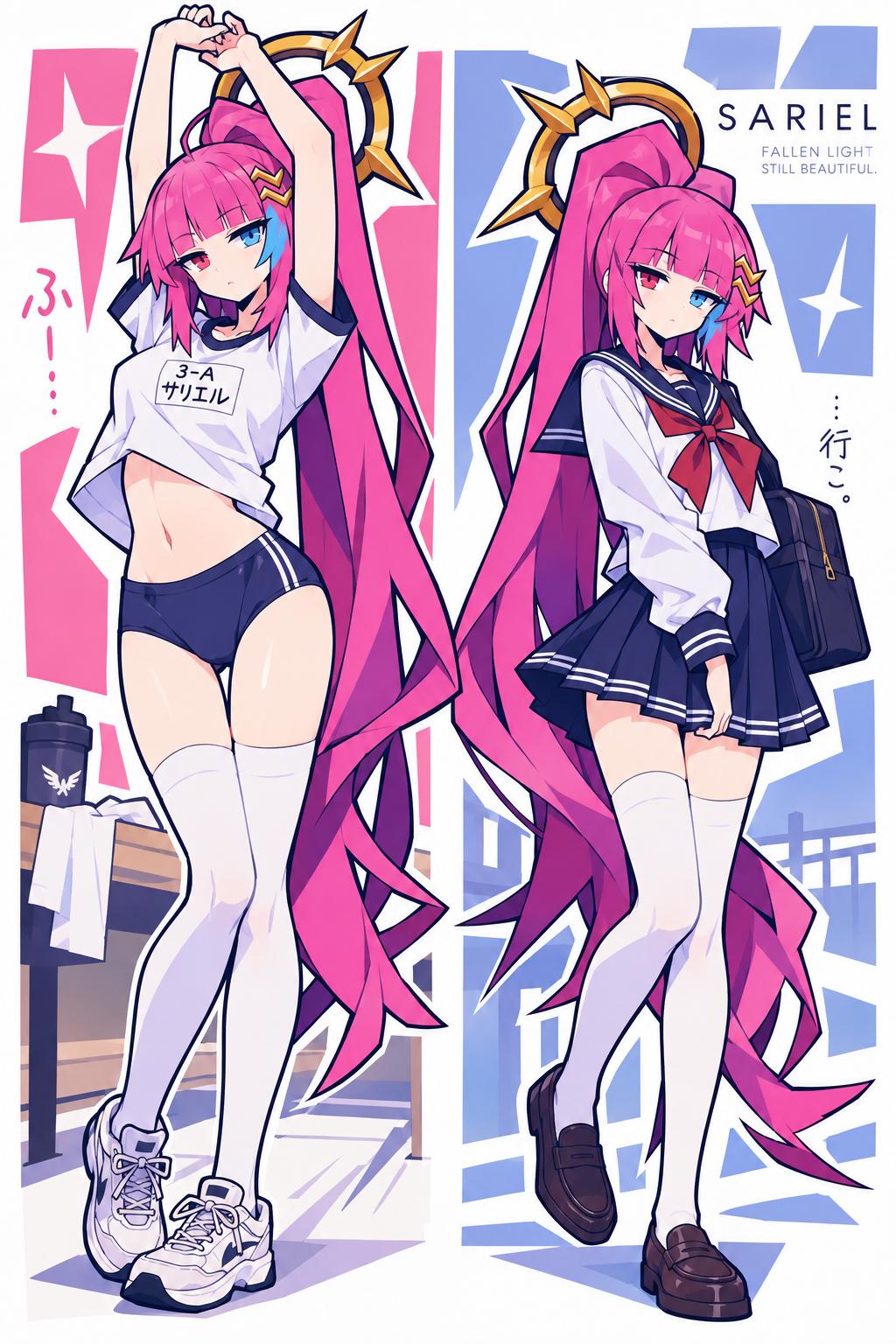
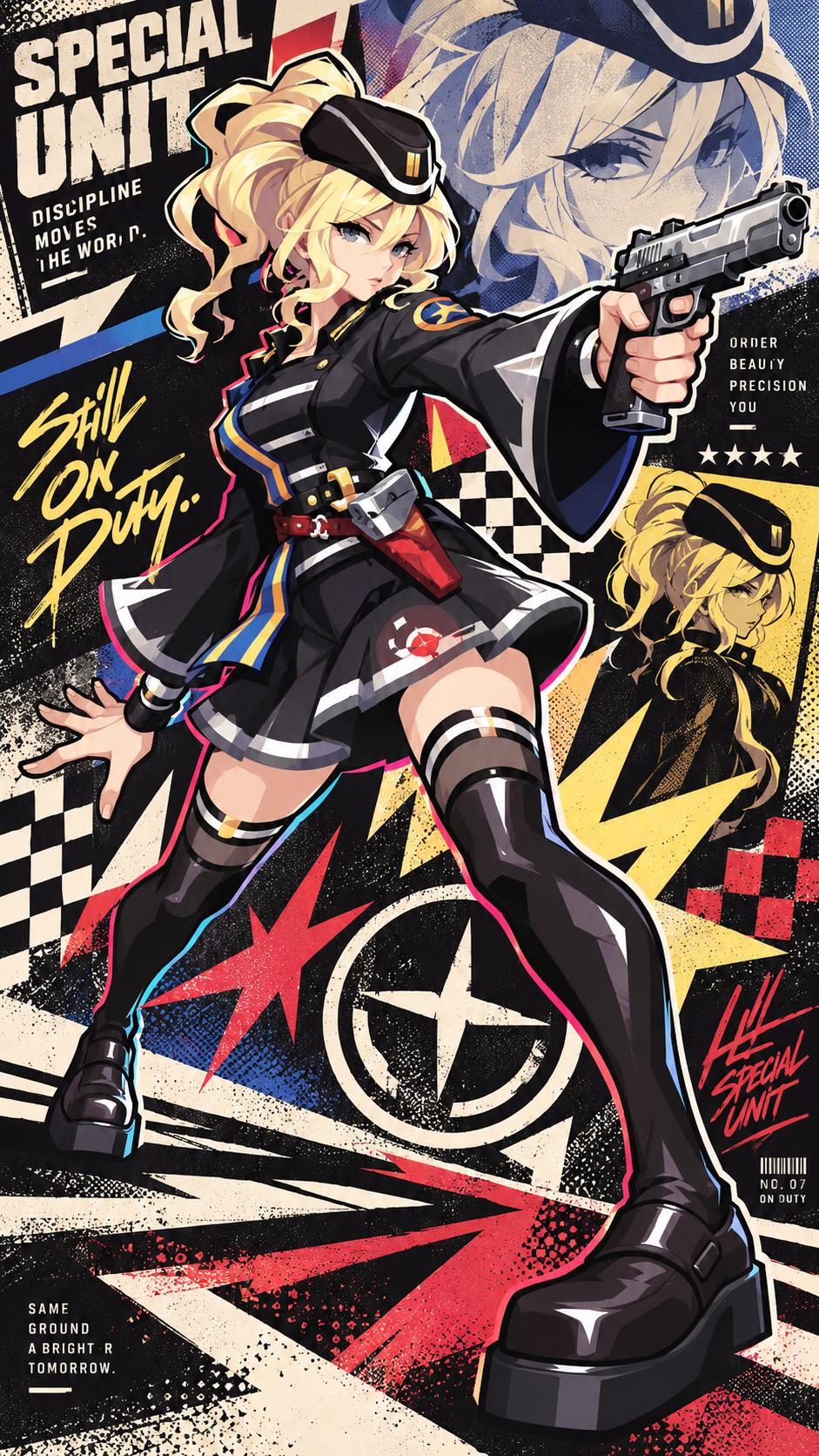
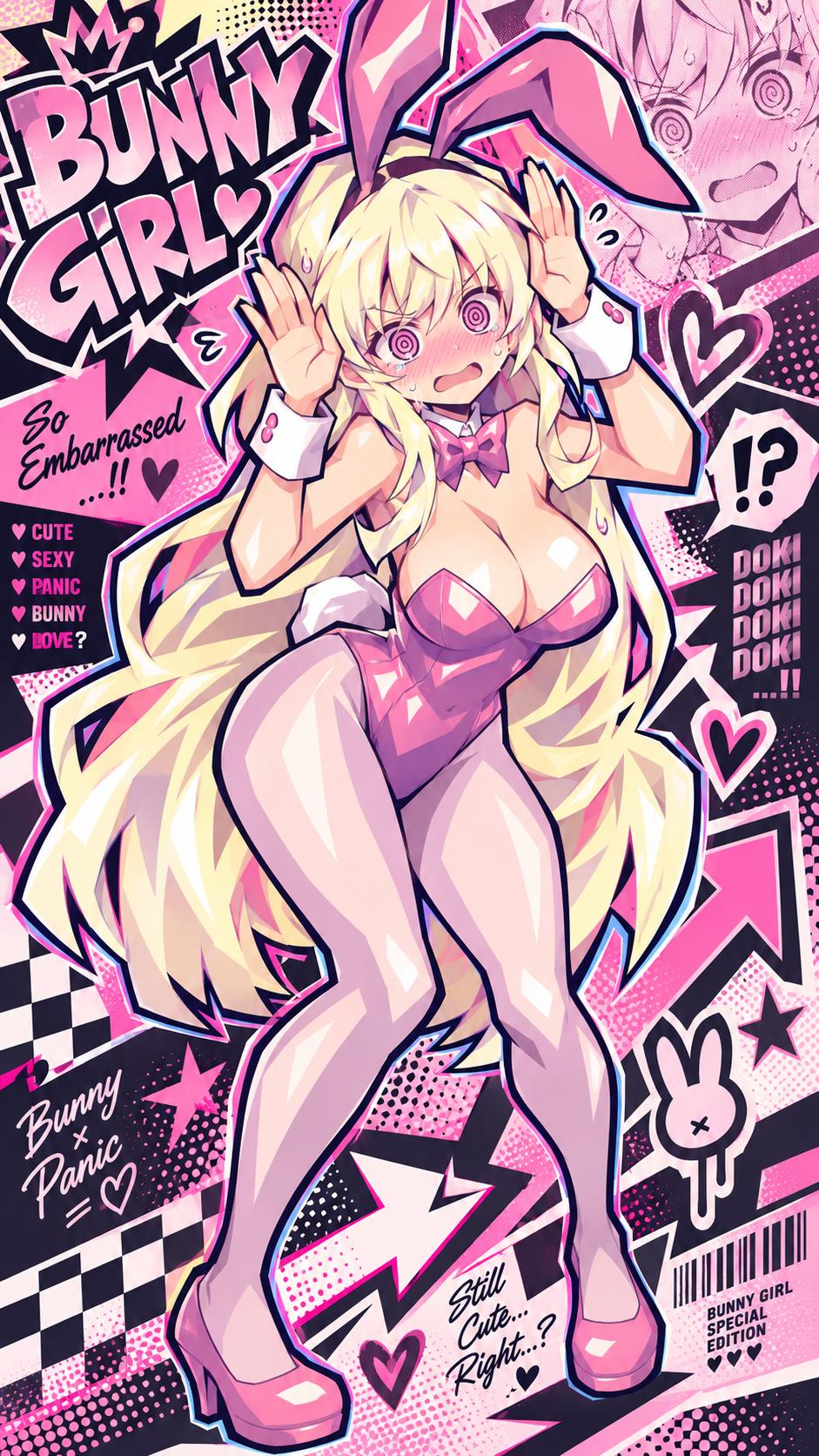
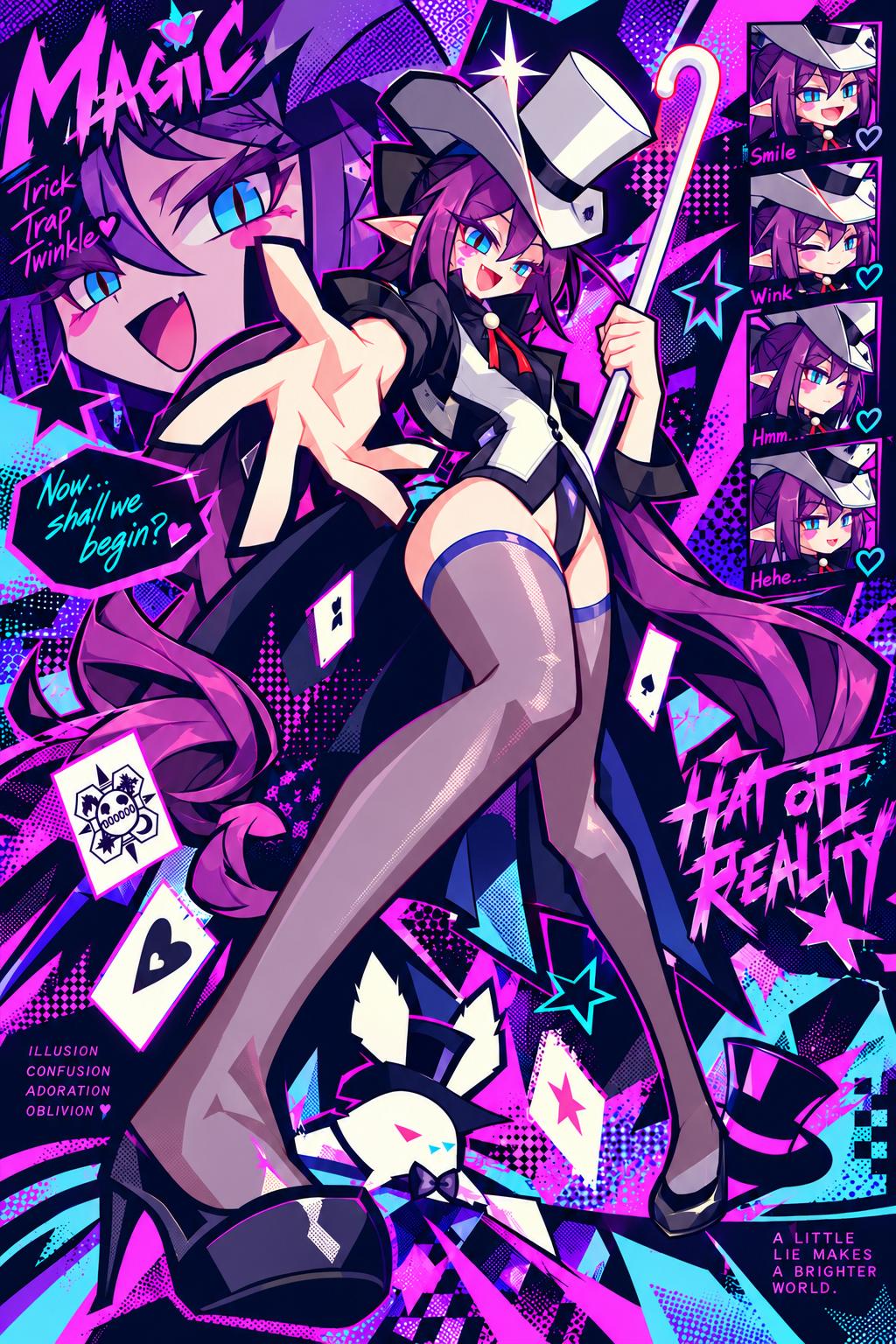
그런데 어느 유튜브 채널이 한 5일전부터 이러한 화풍이랑 상당히 비슷한 스타일을 썸네일 고정 템플릿처럼 계속 사용하고 있는 게 알고리즘에 뜨더라
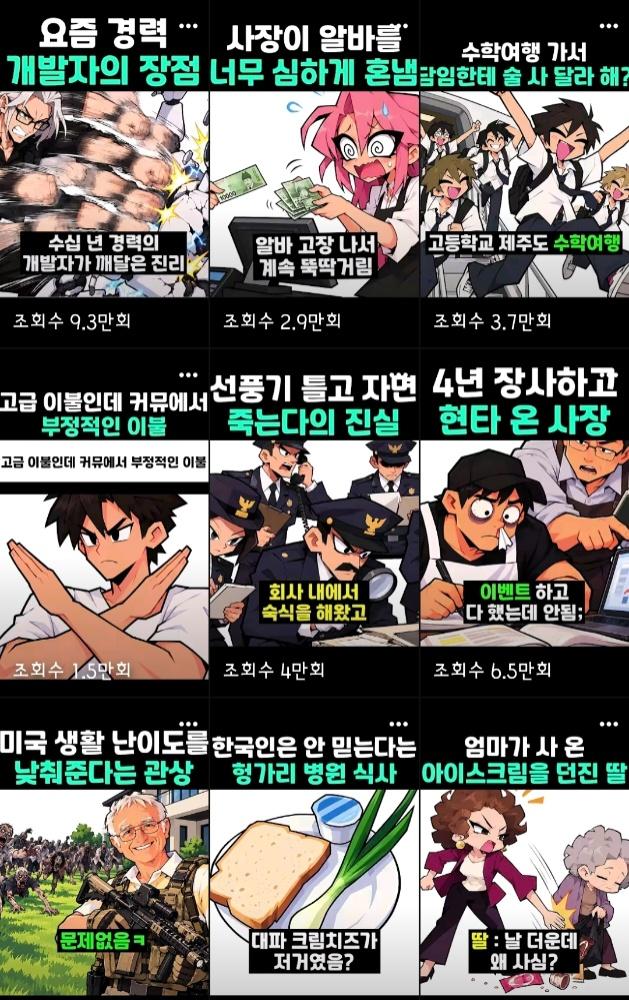
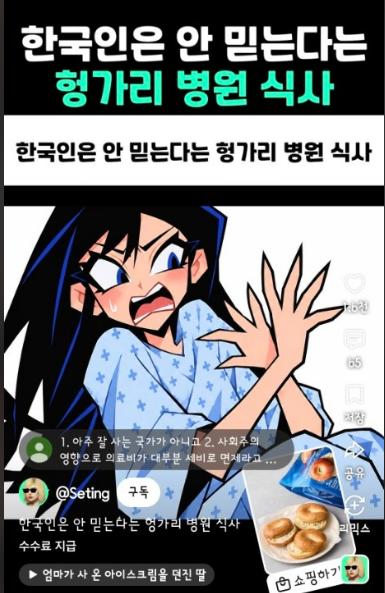
혹시나 싶어서 이런저런 자문을 구해봤는데,
1. 굵고 직각인 외곽선
2. 원색위주 면단위 셀채색(Low-Poly Cel Shading)
3. 신체부위에 걸려있는 과장된 디스토션
등이 내가 기 작성한 프롬프트를 활용한 것이구나 싶더라고.
여기까진 애초에 쓰라고 공개한 것이기도 하고, 내가 만든 프롬프트 자체도 결국 타 작품의 화풍을 학습한 것이 토대인지라 별 생각 없었음.
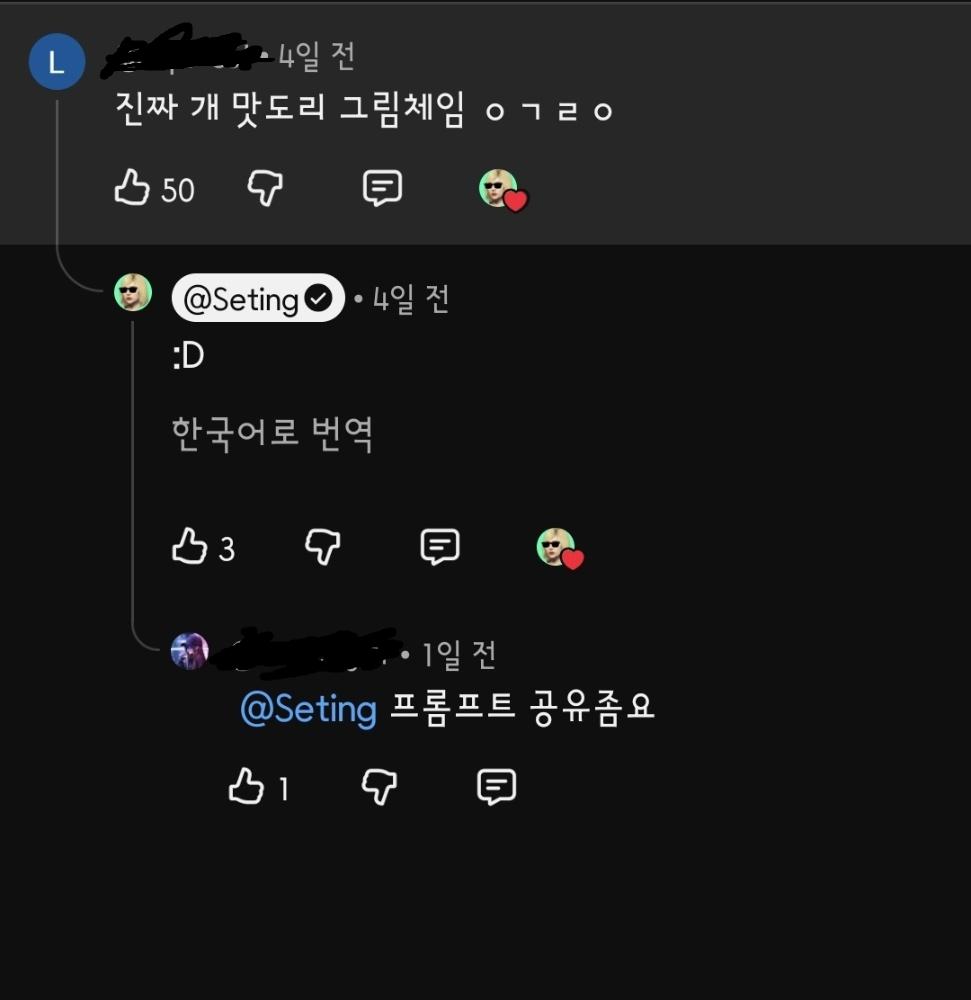
그런데 시청자가 그림체 좋다고 하니까 제작자가 :D 달고 하트 반응은 하면서, 프롬프트 공유해달라는 댓글에는 별다른 답이 없었음.
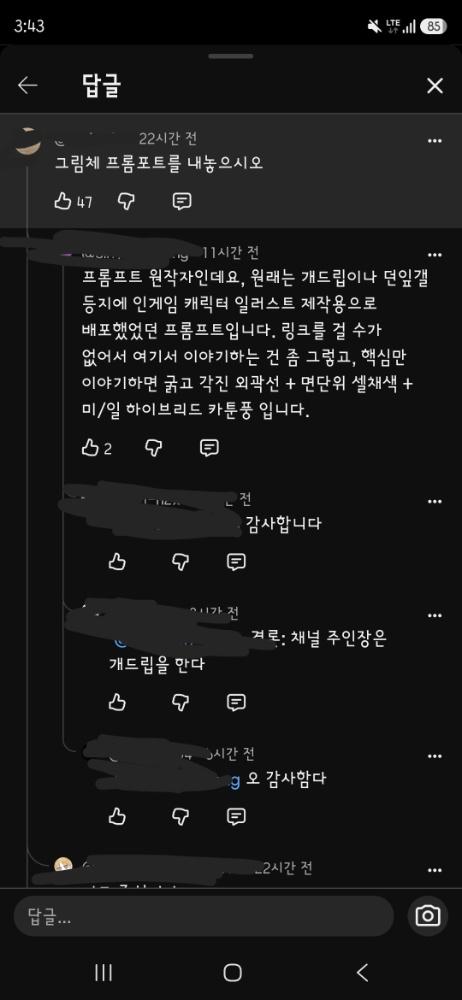
그래서 내가 예전에 공개했던 프롬프트의 핵심 키워드랑 출처 관련해서 댓글을 달았는데,
분명 댓글은 7개인데
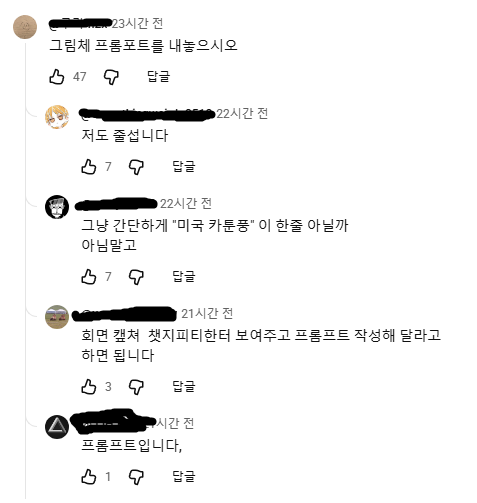
이후 혹시나 싶어 로그아웃하고 확인해보니 달아놓은 댓글 숨겨놨더라.
솔직히 여기서 좀 꼴받았음.
어차피 처음부터 쓰라고 공개한 프롬프트인데, 정작 원래 공개돼 있던 정보는 감추는 모양새가 되니까
굳이 나도 비공개처럼 놔둘 이유가 없겠더라고.
그래서 이 채널 썸네일 및 내용에서 보이는 스타일을 재현할 수 있는 내가 기존에 공개했던 원문 프롬프트 + 세팅값을 그대로 다시 풂.
필요한 사람은 그냥 복붙해서 쓰셈.
상업적으로 쓰든 짤을 만들든 캐릭터를 뽑든 알아서 쓰면 됨.
1. 도트 스프라이트용 일러스트레이션
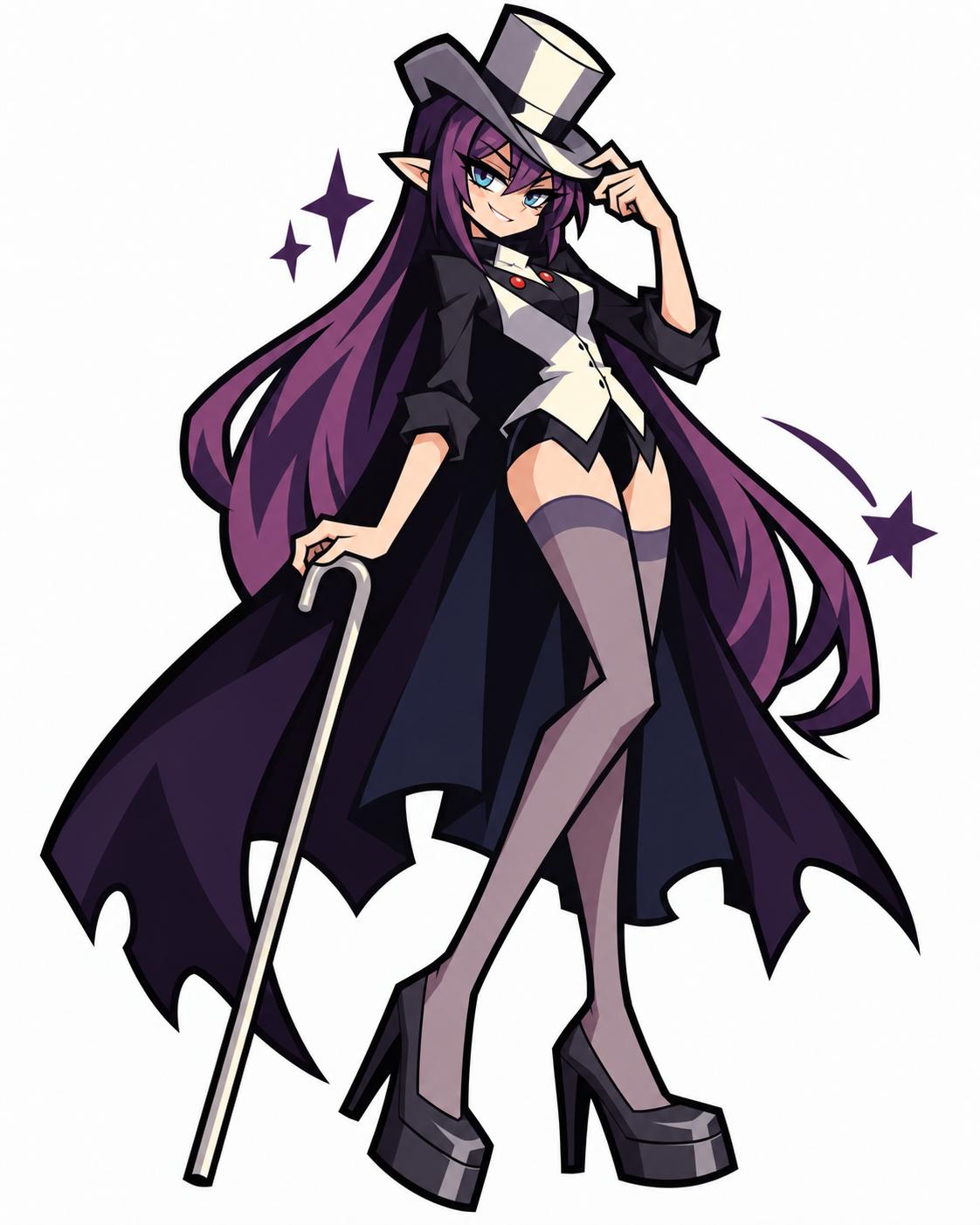
Use the provided character image as the primary character-design reference.
Redraw the referenced character as a full-body 2D anime-cartoon doodle illustration, preserving the original character’s identity and recognizable design while translating it into a bold, highly stylized visual language.
Faithfully preserve the reference character’s existing: hairstyle, hair length, bangs, facial features, clothing silhouette, accessories, footwear, legwear, weapons, props, and primary color relationships.
Do not redesign the character unnecessarily.
The purpose is to reinterpret the existing character in this specific art style, not to create a different character.
STYLE DIRECTION
Create a strong hybrid between:
2000s Japanese anime character design
and
bold Western TV-cartoon / graphic-animation silhouette design.
Use:
Japanese anime aesthetics for the face, eyes, and overall attractiveness
Western cartoon aesthetics for the body silhouette, posing, exaggeration, and shape language
bold cel-animation aesthetics for the linework, colors, and shading
The result should feel like a stylish character from a rebellious, fashion-conscious, Japanese-Western hybrid animated series from the 2000s.
Avoid making the result look like a conventional modern anime illustration.
The character should feel:
playful, cheeky, stylish, confident, slightly rebellious, mischievous, fashionable, graphic, energetic, and personality-driven.
Think more like a character sticker, album-cover illustration, street-fashion poster, or animation key visual than a polished fantasy-game splash illustration.
---
SHAPE LANGUAGE
Prioritize large, simple, highly readable shapes.
Construct the character from clear graphic masses rather than many small details.
Simplify:
hair into large sculpted clumps
clothing into strong silhouette shapes
shoes into bold graphic forms
accessories into recognizable simplified symbols
weapons and props into clean, exaggerated silhouettes
Prioritize:
shape clarity over detail
silhouette over realism
graphic design over material rendering
Every major element should remain readable even when the image is viewed at thumbnail size.
Use sharp points, wedges, curves, triangles, large arcs, and strong negative spaces.
Avoid excessive micro-detailing.
---
LINEWORK
Use very bold, confident black outlines.
The outer contour of the character should be noticeably thicker than the internal linework.
Use strong line-weight hierarchy:
very thick exterior silhouette
medium internal structure lines
minimal fine detail
Lines should be:
clean
smooth
deliberate
crisp
vector-like
animation-ready
Avoid sketchy construction lines or delicate illustration-style outlines.
The drawing should look closer to clean television animation or graphic character art than manga pencil work.
---
FACE
Keep the face distinctly Japanese anime / bishoujo-inspired.
Use:
large expressive eyes
thick upper eyelashes
sharp graphic eyeliner
slightly exaggerated outer eye corners
simplified nose
small but expressive mouth
The face should remain pretty and feminine, but should have more personality than a generic soft moe character.
Expression should preferably feel:
confident, teasing, cheeky, smug, playful, mischievous, amused, or casually self-assured.
Do not turn the face into an American sitcom-cartoon face.
Do not make it realistic.
Maintain the appeal of an anime heroine while allowing the rest of the design to become much more exaggerated.
---
BODY PROPORTIONS
Use exaggerated fashion-cartoon proportions rather than realistic anatomy.
Preferred proportions:
relatively compact upper body
narrow torso
long arms
very long legs
slim limbs
slightly oversized head compared to realism
slightly oversized shoes for silhouette impact
The character should resemble a fashion model translated into a cartoon character.
Keep the body elegant, lanky, and graphic.
Avoid chibi proportions.
Avoid overly voluptuous anatomy.
Avoid realistic anatomical heaviness.
---
POSE
Avoid stiff front-facing standing poses.
Use a dynamic, asymmetrical pose with clear attitude.
Possible posing language:
weight shifted heavily onto one leg
one knee bent
hips tilted
shoulders tilted in the opposite direction
torso slightly twisted
head tilted
arms forming strong graphic angles
leaning against or casually handling a prop
exaggerated contrapposto
S-curve or diagonal body rhythm
The character’s personality should be understandable from the silhouette alone.
The pose should feel like a combination of:
fashion editorial posing + Western cartoon exaggeration + anime character acting.
Prefer slightly theatrical posing over realistic neutral posture.
---
HAIR
Preserve the hairstyle from the reference image, but reinterpret it using large graphic masses.
Do not render hundreds of individual hair strands.
Use a limited number of:
large hair clumps
bold curves
sharp pointed tips
exaggerated silhouette shapes
Hair should feel sculpted and designed rather than naturally strand-by-strand.
Use strong outer contours.
Internal hair lines should be sparse.
---
CLOTHING AND ACCESSORIES
Preserve the actual outfit and accessories from the provided character reference.
Do not replace the outfit with generic fashion.
Do not automatically add new decorations.
Simplify existing costume elements into clear cartoon shapes.
Use large folds and graphic planes instead of realistic fabric simulation.
Any lace, trim, pattern, armor, jewelry, straps, or decorative elements should be simplified enough to remain readable.
Prioritize the overall costume silhouette over tiny ornamental accuracy.
---
COLOR
Use a limited, high-contrast animation palette.
Favor:
clean flat colors
strong color separation
saturated accent colors
deep blacks
clean whites
clearly separated local colors
Preserve the reference character’s actual color relationships.
If the source is pixel art or low-resolution artwork, distinguish between:
true base colors
and
colors caused by anti-aliasing, lighting, highlights, shadow ramps, or pixel blending.
Do not reinterpret pixel-art highlight colors as new costume colors.
---
SHADING
Use classic hard-edged cel shading.
Use approximately one or two large shadow shapes per major form.
Keep the shading:
simple
graphic
angular
clearly separated from the base color
Avoid soft airbrush rendering.
Avoid realistic skin rendering.
Avoid complicated bounce lighting.
Avoid excessive gradients.
Small sharp highlights may be used selectively on:
eyes
hair
metal
glossy shoes
accessories
Overall rendering should remain mostly flat.
---
GRAPHIC ATTITUDE
Push the character slightly beyond normal anime prettiness.
Add a sense of:
swagger, attitude, playful arrogance, punk-fashion energy, cartoon confidence, and visual rhythm.
The character should not simply stand there looking beautiful.
They should feel like they are performing their personality for the camera.
Maintain a slightly irreverent, stylish energy.
---
COMPOSITION
Show the entire character from head to toe.
Do not crop:
head
hands
feet
shoes
hair
weapon
important props
Use a vertical character-focused composition.
Leave clean negative space around the silhouette.
Avoid excessive perspective distortion.
If the character has a large weapon or prop, arrange it as part of the overall graphic composition rather than letting it obscure the character.
---
BACKGROUND
Use a plain white, off-white, or extremely pale neutral background.
Keep environmental detail minimal.
Optional small graphic accents:
stars
sparkles
arrows
hearts
speed lines
motion curves
abstract symbols
small hand-drawn doodles
These should function as compositional accents only.
The result should resemble a:
character sticker, doodle illustration, poster graphic, animation model art, or album-cover character illustration.
---
FINAL VISUAL TARGET
Bold black outlines.
Extremely clean silhouette.
Long exaggerated limbs.
Large graphic shoes.
Sharp hair shapes.
Strong eyelashes.
Flat colors.
Hard cel shading.
Minimal rendering.
Dynamic asymmetrical posing.
Japanese anime beauty combined with Western cartoon exaggeration.
Playful, fashionable, slightly rebellious attitude.
A stylish 2000s anime × Western cartoon hybrid aesthetic, with strong graphic design and a highly readable silhouette.
Preserve the referenced character’s identity, but completely translate the visual language into this style.
---
Negative Prompt
pixel art, pixelated output, sprite rendering, low resolution, blurry edges, muddy linework,
photorealistic, realistic, semi-realistic, realistic anatomy, realistic skin, skin pores, realistic muscle definition,
3D render, CGI, game model, plastic material, glossy 3D character,
painterly rendering, oil painting, watercolor, soft brush, visible brush strokes, concept art painting,
soft airbrush shading, excessive gradients, realistic cinematic lighting, volumetric lighting, heavy bloom, excessive rim lighting, neon glow,
generic modern anime illustration, generic gacha game illustration, polished mobile game character splash art, generic fantasy RPG character art,
soft moe style, pastel moe, kawaii-only aesthetic, idol anime style, shoujo manga style,
Korean webtoon style,
chibi, super deformed, giant head, short legs, tiny body,
realistic body proportions, bulky torso, overly muscular body,
exaggerated breasts, exaggerated hips, excessive hourglass figure, sexualized anatomy,
thin outlines, delicate outlines, weak silhouette lines,
rough sketch, pencil sketch, construction lines, messy overlapping strokes, cross-hatching,
overly detailed individual hair strands, realistic hair rendering, hair strand simulation,
excessive costume micro-details, excessive jewelry, random belts, random ribbons, random frills, random accessories,
unnecessary costume redesign, different hairstyle, different outfit, different shoes, different weapon,
incorrect base colors, random recoloring,
symmetrical standing pose, stiff frontal pose, military attention pose, T-pose, ID-photo pose,
cropped head, cropped feet, cropped hands, cropped weapon, character outside frame,
bad anatomy, extra limbs, duplicated limbs, malformed hands, fused fingers, extra fingers, missing fingers, broken joints, distorted face, crossed eyes,
busy background, realistic environment, cityscape, interior scene, landscape, crowd,
text, letters, captions, logo, watermark, interface, UI.
2. 팝 일러스트레이션
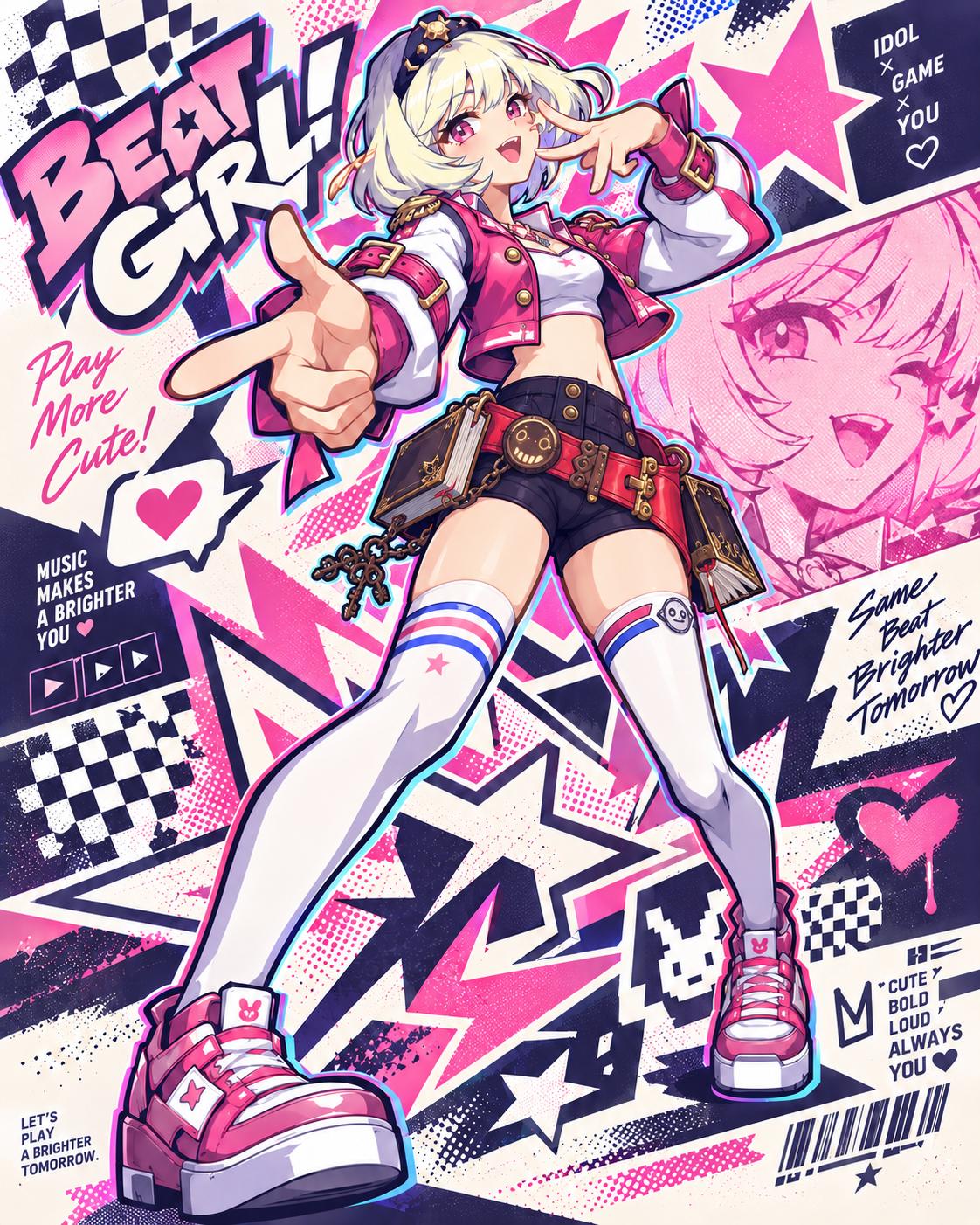
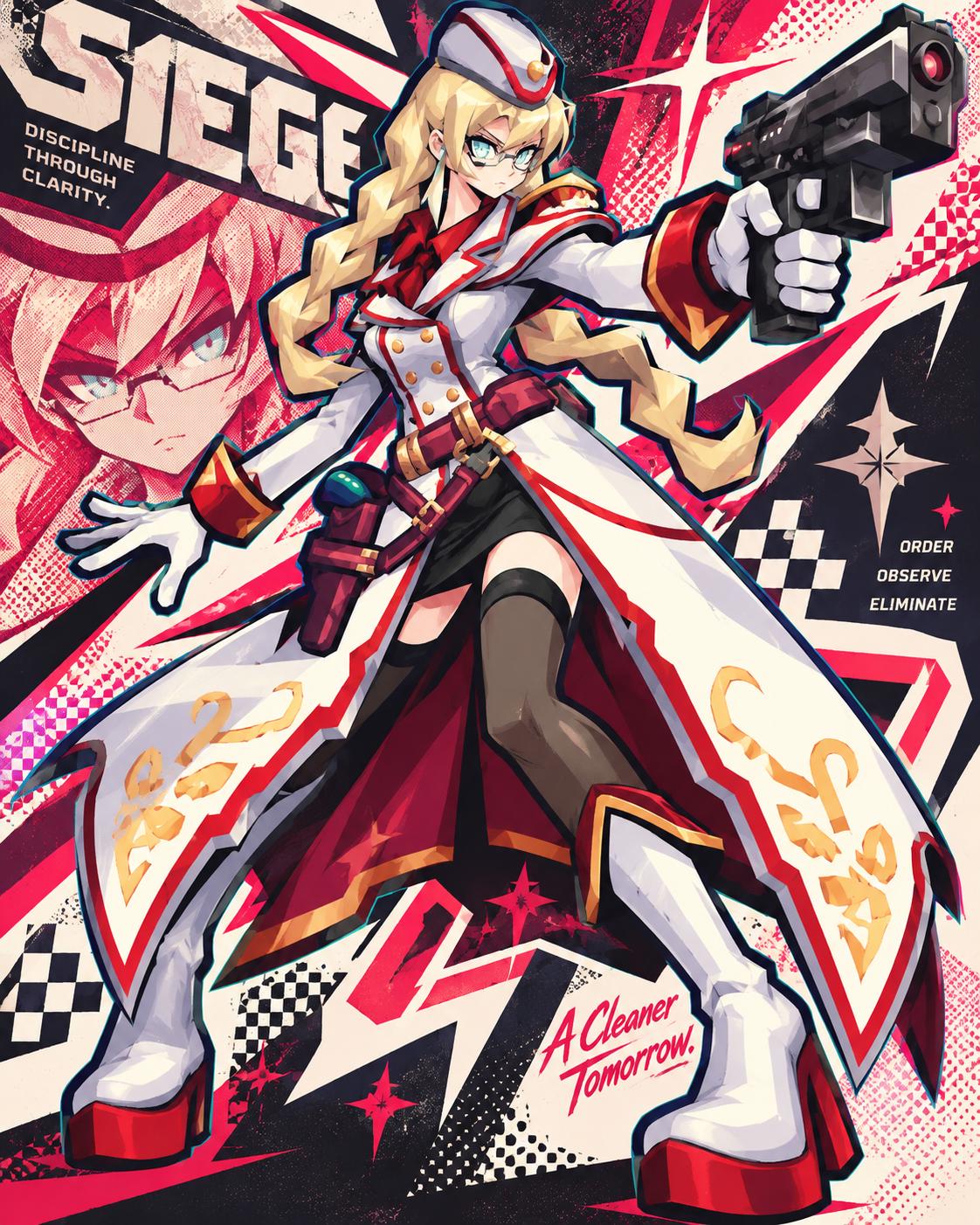
CORE STYLE LOCK
Create a bold anime-pop / Western-cartoon hybrid illustration.
The CHARACTER ITSELF must visibly carry the graphic style.
Do NOT create a conventional modern anime character with colorful Y2K graphics added around them.
The visual language should combine:
Japanese anime facial appeal
early-2000s Western TV-cartoon shape language
arcade / rhythm-game promotional graphics
Y2K pop advertising
sticker-sheet graphics
screen-printed poster design
simplified comic-book color blocking
The face may remain recognizably anime-inspired,
but the BODY, HANDS, FEET, SILHOUETTE, POSE, and LINEWORK should be much more graphic and cartoon-driven.
SHAPE LANGUAGE
Prioritize bold graphic shapes over realistic anatomy.
Use:
compact torso construction
simplified limb shapes
exaggerated gesture
slightly oversized hands
slightly oversized footwear
sharp elbows and knees
strong tapering
dramatic curves
angular accents
clear negative spaces between limbs
exaggerated but readable perspective
The silhouette should remain immediately readable at thumbnail size.
Do NOT use delicate fashion-illustration anatomy.
Do NOT use standard contemporary bishoujo proportions.
LINEWORK
Use thick, confident dark-navy or deep-purple exterior contours.
Interior lines should be sparse and selective.
Line weight should vary strongly.
Use:
thick outer contour
thinner interior lines
sharp tapered line endings
strong graphic edges
occasional cyan / magenta offset contour accents
Avoid thin, uniform anime lineart.
HAIR
Treat hair as large graphic masses rather than many individual strands.
Use:
large curved clumps
bold hooks
ribbon-like shapes
angular tips
simplified highlights
exaggerated silhouette volume
Avoid overly detailed strand-by-strand hair rendering.
COLOR AND SHADING
Use flat, saturated color blocking.
Prefer:
1 main local color
1 shadow group
1 highlight group
occasional accent reflections
Shadows should be large, simple, and graphic.
Avoid soft painterly gradients.
Avoid glossy gacha-game skin rendering.
Avoid delicate subsurface shading.
POSE AND PERSPECTIVE
Use energetic promotional posing rather than elegant fashion posing.
Allow:
exaggerated foreshortening
limbs projecting toward camera
tilted torso
off-center balance
bent knees
stretched arms
asymmetrical body rhythm
strong diagonals
playful action poses
cropped limbs near the frame edge
The pose should feel designed for a poster, game splash screen, or animated opening frame.
Avoid neutral catalog poses.
GRAPHIC COMPOSITION
Integrate the character with the graphic design.
Use:
overlapping starbursts
thick arrows
checkerboard fragments
halftone dots
sticker-like icons
chunky geometric cutouts
diagonal panels
frame graphics
UI-like symbols
pop-art bursts
large flat color blocks
The character and background should feel designed together.
Do NOT make the character look pasted on top of a decorative background.
IMPORTANT STYLE TEST
Imagine removing the background entirely.
The character alone should STILL look like part of a bold Y2K arcade / rhythm-game / pop-cartoon illustration.
If the character would look like ordinary modern anime without the background,
the style is too generic.
AVOID
generic modern anime
generic gacha-game rendering
light-novel illustration
delicate bishoujo lineart
painterly skin
realistic anatomy
fashion-model anatomy
thin hands and feet
tiny shoes
soft airbrushed shading
highly detailed hair strands
excessive gradients
cinematic realism
glossy mobile-game rendering
3. 아예 팬스가풍으로 가중치를 둔 일러스트레이션
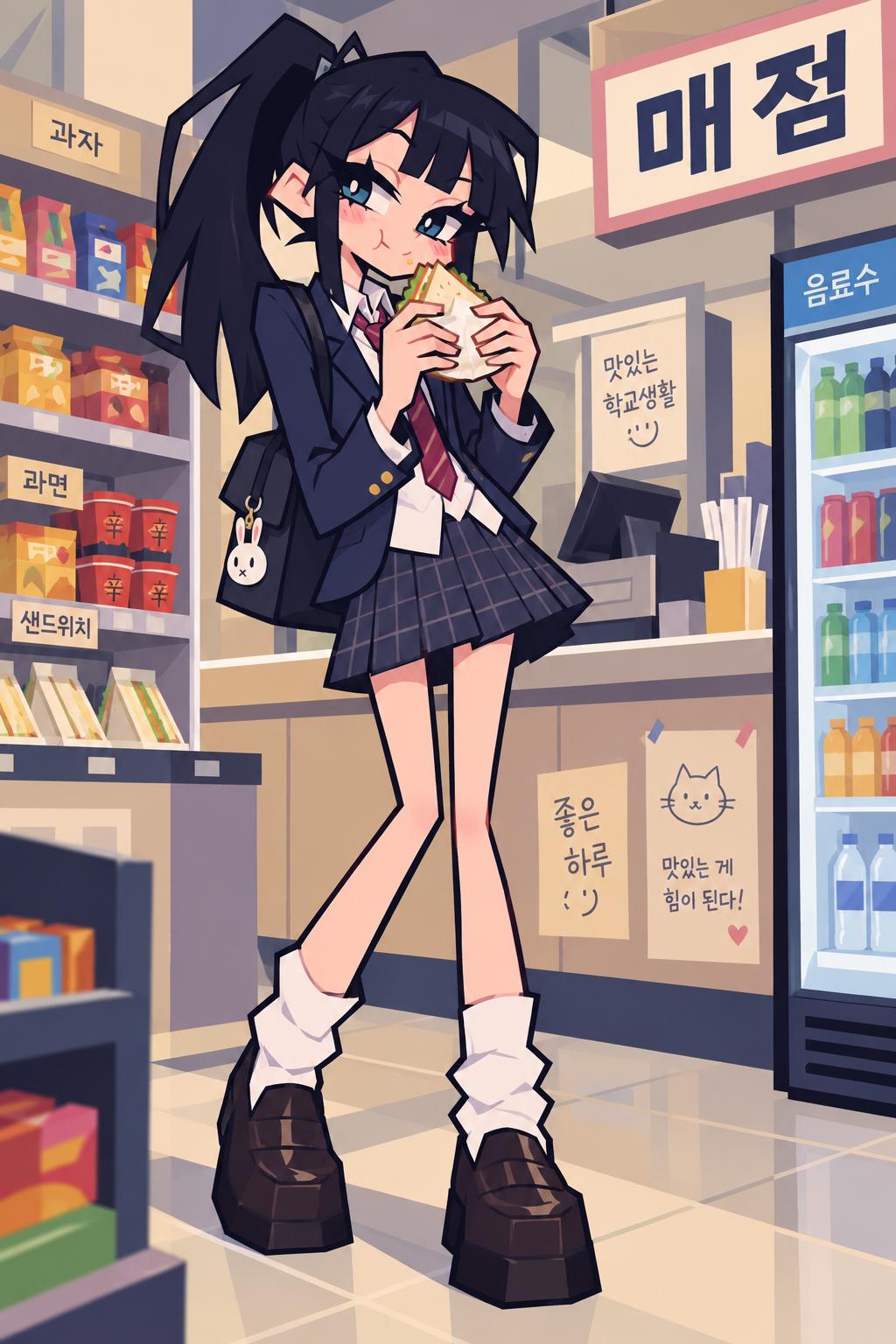
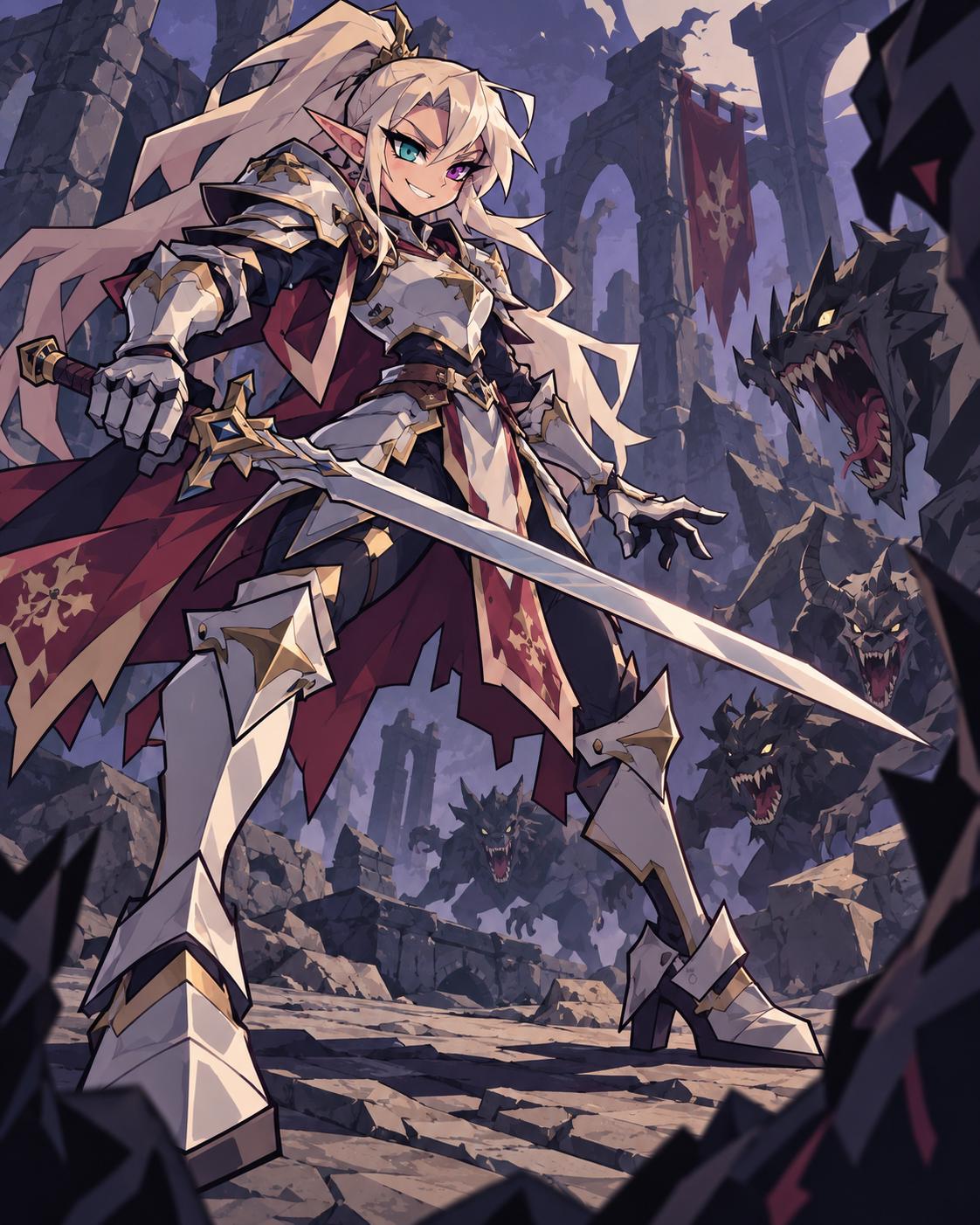
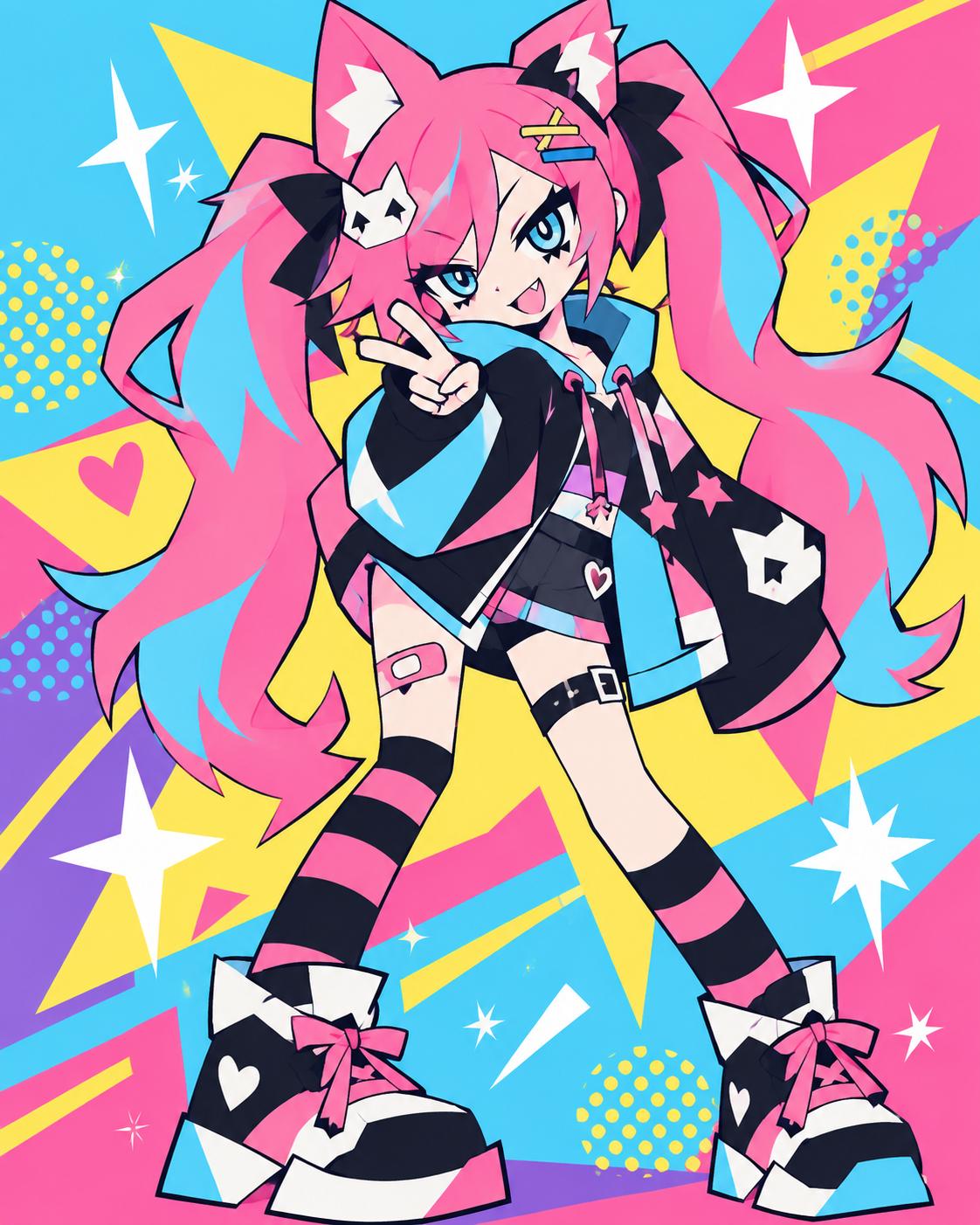
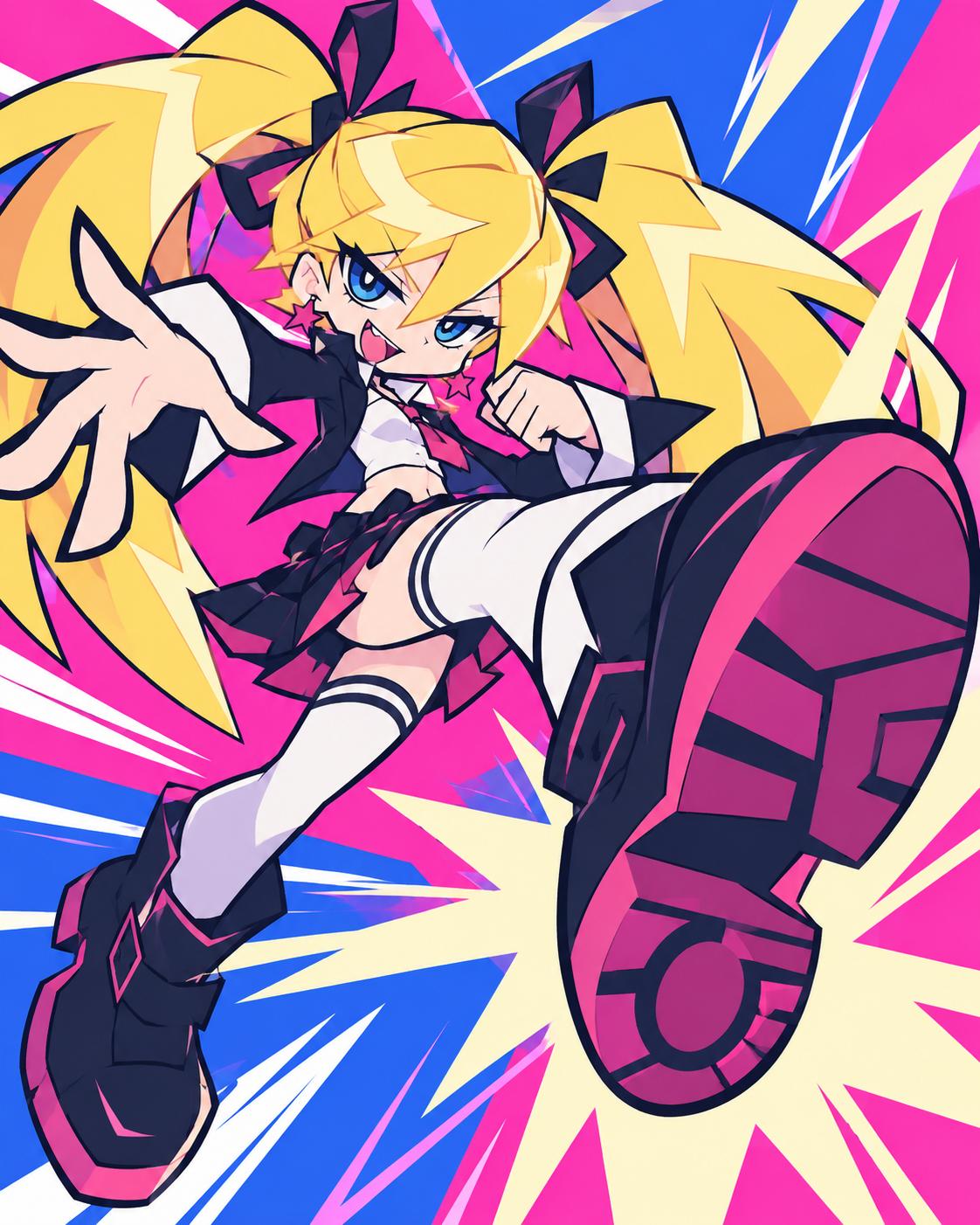
Create a 2D character illustration that combines the appealing facial features of Japanese anime with the bold anatomical exaggeration of Western TV cartoons. Use the strong graphic sensibility of Panty & Stocking with Garterbelt as a stylistic reference. The defining features are thick, angular outlines, flat cel shading, heavy eyelashes with slightly upturned outer eye corners, exaggerated elongated limbs, and oversized hands and feet.
-
LINEWORK AND SHAPE LANGUAGE
Use thick, crisp outlines in a deep navy that is almost black. Keep the outer silhouette bold, while making the descriptive lines inside the face and clothing relatively thinner and simpler.
Construct the shapes themselves from straight lines, wedges, trapezoids, and angular curves. Introduce near-right-angle bends and clear directional changes in the jawline, hair tips, elbows, knees, collars, sleeves, and hems. Even flowing contours should combine long straight sections with sharp corners to create visual rhythm.
-
BODY PROPORTIONS AND SILHOUETTE
Make the head large relative to the torso. Keep the shoulders and rib cage compact and simplified, and compress the torso vertically. Stretch the arms and legs noticeably in proportion to the torso, particularly exaggerating the length of the forearms and lower legs.
The limbs should be long and slender, tapering toward narrow wrists and ankles before connecting to oversized hands and footwear. Treat the hands as large, expressive shapes that communicate gestures and emotion. Render the shoes as substantial geometric forms with thick soles and clearly readable volume.
Do not simply draw a tall fashion-model figure. Actively redesign the relative sizes of the head, torso, limbs, hands, and feet to create distinctly cartoon-driven proportions. Minimize anatomical descriptions of muscles and joints, and make the action readable through the silhouette alone.
-
FACE AND EYES
Build the face around large, expressive anime-inspired eyes, a small nose and mouth, and a simplified jawline. The eyes should be wide and open, with slightly raised outer corners.
Treat the upper eyelids and eyelashes as thick, dark graphic masses. Extend the outer eyelashes into pointed triangular or wedge-shaped accents that give the eyes a strong visual presence. Construct the irises from simple color shapes with only a few crisp highlights, avoiding intricate patterns and excessive sparkle.
Express emotion clearly through the angle of the eyebrows, the openness of the eyelids, small changes in the mouth, and the shape of the cheeks. Give the expression energy and a subtle sense of playfulness.
-
HAIR AND CLOTHING
Draw the hair as large, angular masses rather than numerous individual strands. Shape the bangs like cleanly cut segments, and organize side locks and longer sections into directional ribbons or wedges.
Preserve the structure and defining features of the clothing while simplifying folds into triangular and polygonal planes. Apply the same angular shape language consistently to collars, sleeves, skirt pleats, socks, and shoes. Include only the details needed to explain the silhouette and movement.
-
COLOR AND SHADING
Place clearly defined cel shadows over broad, clean areas of flat base color. Limit each material to two or three tonal steps, primarily a base color and a shadow color.
Design the shadows as triangles, trapezoids, and polygons that appear cut out and placed along the forms. Divide the skin, hair, and clothing into distinct planes of light and shadow. Introduce subtle violet or navy hues into the shadows to unify the palette.
Use vivid accent colors without filling the entire image with neon. Make the forms clearly readable through the contrast between dark outlines and light and dark color blocks.
-
POSE AND COMPOSITION
Use natural asymmetry, such as different shoulder and hip angles or a stance with the weight resting on one leg. Combine the angles of the elongated limbs with a gentle S-shaped flow to create a flexible, lively pose.
Make the actions of the hands and face immediately readable, and leave clear negative space between the limbs and torso. In full-body compositions, show the exaggerated hands, feet, and footwear completely.
If a background is included, simplify objects and architecture into geometric masses, using less contrast and detail than on the character. Apply the same angular construction and flat cel shading to the environment.
AVOID
Realistic body proportions; delicate outlines; uniformly soft, rounded shapes; overly fragmented hair strands; excessive clothing folds; intricate, sparkling irises; airbrushed shading; gradient-dominated coloring; glossy, volumetric skin rendering; painterly brushwork; and 3D rendering.
PRIORITY ORDER
Thick, angular linework → compact torso and elongated limbs → oversized hands and feet → heavy eyelashes and slightly upturned eye corners → clear, flat cel shading.
----
혹시나 이 글을 보게 될 렉카에게...
누구나 쓰라고 공개해둔 걸 가져다 쓰면서 클로즈드소스인 척하면 안 되지?